

Captured Wild
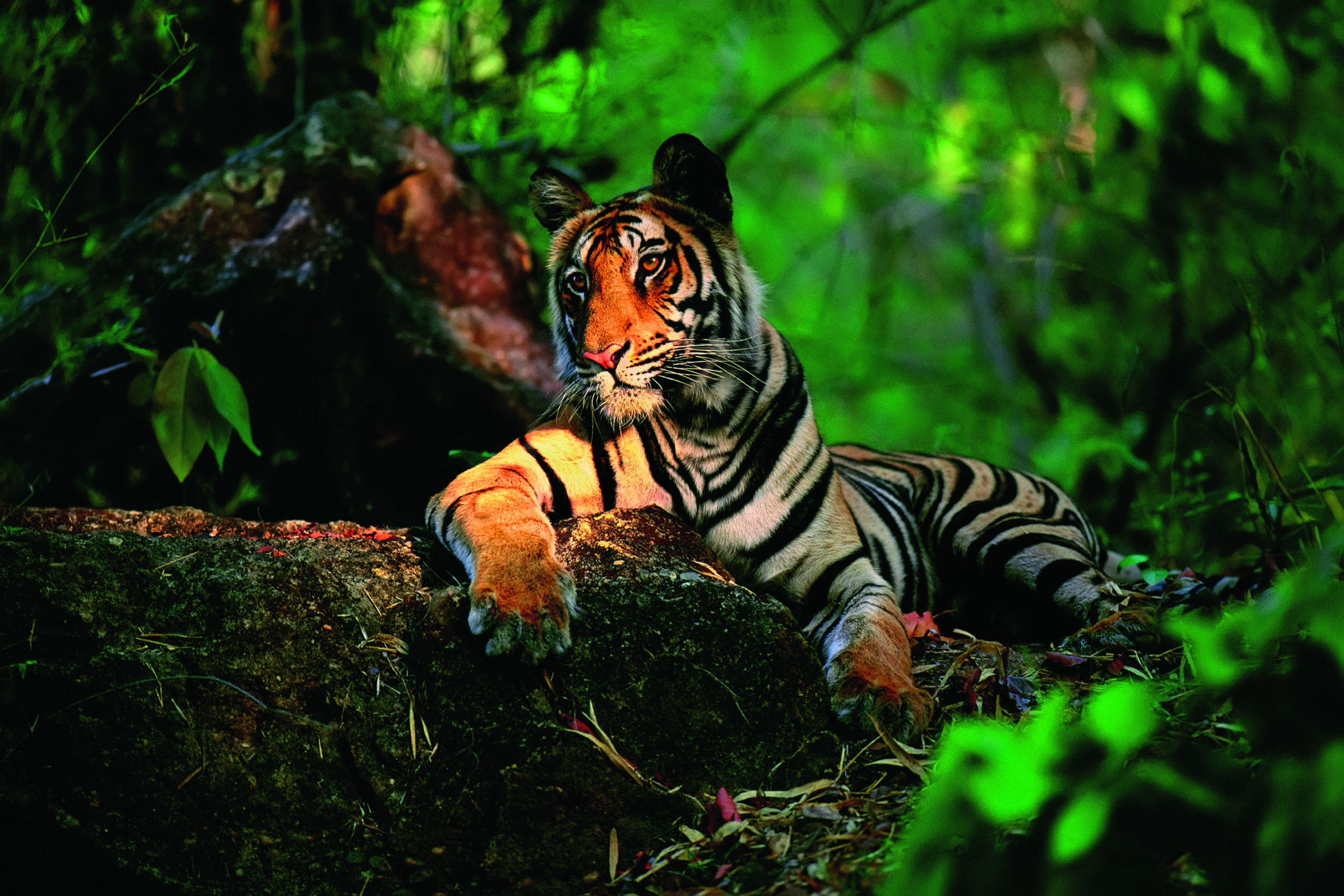
Thomas D. Mangelsen Brings Half a Century of Patience to Phoenix Zoo
Writer Joseph J. Airdo // Photographer Thomas D. Mangelsen
The salmon arcs through Alaskan air, its silver body twisting in that millisecond between river and sky. Below, a massive brown bear’s jaws hang open, waiting. The fish will land perfectly — impossibly — in the bear’s mouth, frozen forever in what has become one of the most recognizable wildlife photographs in history.
Thomas D. Mangelsen spent a week camping 20 feet from a bear trail to capture that single frame in 1987. No digital manipulation. No game farm shortcuts. Just a photographer, his previsualization, and the patience to wait for nature to reveal itself. Now, that iconic image — “Catch of the Day” — anchors “A Life in the Wild,” a touring exhibition featuring 40 of Mangelsen’s most resonant photographs on display this season at the Phoenix Zoo’s Wild Side Gallery.
For nearly 50 years, Mangelsen has traveled to the wildest corners of all seven continents, documenting polar bears in the Arctic, tigers in India, and the diversity of wildlife across the American West. His work has earned him designation as Conservation Photographer of the Year, BBC’s Wildlife Photographer of the Year, and recognition by American Photo magazine as one of the 100 Most Important People in Photography. Jane Goodall and Bill Allen, former editor-in-chief of National Geographic, consider him among the most important nature photographers of his generation.
“His photographs have an impact that stays with you,” Allen has said. “They allow viewers to momentarily escape from their busy lives and dwell inside big, humbling landscapes. Rather than being mere documentarian in their purpose, they also reveal personalities of wild, sometimes imperiled animals, reminding us that they are creatures of remarkable sentience.”
The Phoenix Zoo exhibition, running through May 31, showcases photographs printed on a dramatic scale — some up to nearly 9 feet across — transforming the gallery into an immersive journey through landscapes and wildlife encounters that span decades of dedication. Among them: “Polar Dance” (1989), which National Geographic called one of the most important photographs of our time for prompting viewers to ponder climate change consequences; “Mountain Outlaw” (2014), portraying a grizzly bear charging head-on through snow; and the legendary “Catch of the Day.”
“We are honored to welcome Thomas D. Mangelsen to the Phoenix Zoo, not only as a globally acclaimed photographer but as a powerful voice for wildlife conservation,” says Bert Castro, president and CEO of the Phoenix Zoo. “His upcoming visit and this remarkable exhibition bring inspiring energy to our Art on the Wild Side program and offer our community a meaningful opportunity to connect with wildlife in a profound and memorable way. This is truly a milestone moment for the zoo and our guests.”
Mangelsen will appear in person at the Phoenix Zoo on Feb. 27 for a special evening that includes his presentation at the Doornbos Discovery Amphitheater, up-close animal encounters, hors d’oeuvres and beverages, and a visit to the Wild Side Gallery to view the exhibition. Tickets for the limited-capacity event are $75 per person.
The artist’s appearance offers a rare opportunity for collectors and photography enthusiasts to hear directly from Mangelsen about the stories behind his most iconic images — stories that often span years and require the kind of dedication that has become increasingly rare in the digital age.
The story behind “Catch of the Day” embodies everything Mangelsen represents: meticulous preparation meeting serendipitous opportunity, all filtered through decades of honed skill and intimate knowledge of animal behavior.
“The magic of ‘Catch of the Day’ started with pre-visualization,” Mangelsen recalls. “I saw an article in Alaska Airlines Magazine on my way to Anchorage while working on a film about cranes. The article showed bears at the falls at McNeil River and Katmai — a dozen of them below and on top of the falls — with fish jumping everywhere.
“I knew about that location and honestly thought all the pictures had already been taken. There were thousands of them out there. But then I wondered: Was there any chance of getting a head-and-shoulders picture of a fish right in the face of a bear? Just a really tight portrait? I’d never seen one before, and I thought that would be something different. Bears jumping, fish jumping, a dozen bears in the falls — that was already done.”
Mangelsen secured the only available camping spot — 20 feet from a bear trail along the lakeshore — and equipped himself with Kmart camping supplies and freeze-dried food. He spent a week shooting 15 rolls of 36-frame film at ISO 50, a glacially slow speed by today’s standards.
“I realized I couldn’t react fast enough looking through the viewfinder, so I used a remote and just clicked the shutter,” he explains. “I didn’t even know if I got it. I knew I was close a couple times. It was probably six weeks later when I finally saw that frame — after getting back to the office and the processor.”
The resulting photograph has been accused countless times of digital manipulation, an accusation that both amuses and frustrates Mangelsen.
“It kind of pisses me off because I spent most of my life — from 20 years old on — learning the skill of the camera, my craft, animal behavior, being able to pre-visualize something like that,” he says. “I never saw a picture like it before. Still haven’t. Now it’s said to be the most copied photograph on Earth — everyone trying to get it.”
That authenticity — the knowledge that every image in Mangelsen’s portfolio was captured in the wild under natural conditions — distinguishes his work in an era of rampant digital manipulation and photographers who rent “wildlife models” by the hour from game farms.
“What excitement is that? It’s boring to me,” Mangelsen says bluntly. “People who say, ‘I’ll fix it in the computer later’ — that’s not photography to me. Photography is not manipulating images you didn’t actually get. You’re making it up. It’s a phony photograph.”
His philosophy extends beyond technical purity to encompass a deeper spiritual connection with his subjects. When asked about the long hours spent waiting in blinds, Mangelsen describes entering what others have called a “zen zone.”
“I just shut everything else out,” he explains. “Someone can be talking right in my ear, but if something’s happening, I don’t hear them. I can’t let them distract me because I have to pay attention to subtleties. If there’s a God or supreme being for me, it would be the feeling of nature, the spirit of nature. I look to nature to heal me.”
The exhibition arrives at the Phoenix Zoo as part of its Art on the Wild Side program, which features rotating exhibitions throughout the year in both the Wild Side and Savanna galleries. The program selects artists whose work inspires deeper appreciation of wildlife, conservation and the natural world through photography, painting and mixed media.
“We are thrilled to bring ‘A Life in the Wild’ tour to the Phoenix Zoo,” says Jean Bingham, trustee and member of the zoo’s Arts Committee. “Thomas D. Mangelsen’s legacy as both an artist and conservationist offers guests a rare opportunity to experience nature’s beauty and power through his extraordinary images.”
For Mangelsen, showing his work at zoos represents an essential democratization of wildlife experience. Not everyone can spend 42 days watching cougars at the National Elk Refuge or travel to photograph polar bears in the Arctic — but they can encounter these animals through his lens, surrounded by living examples in ethical institutions.
“I think for people or children, especially those who may never have the opportunity to see a bobcat or a cougar in the wild, these institutions are invaluable,” Mangelsen says. “People who don’t have the luxury that I have with my profession — and I guess it is a luxury, though it’s also what I would do even if I wasn’t a professional — they need the opportunity to see these animals.”
Perhaps most powerfully, Mangelsen’s work demonstrates photography’s continued capacity to influence conservation policy and public consciousness. He spent 20 years documenting Grizzly 399, a legendary bear in the Greater Yellowstone Ecosystem who raised 18 cubs before being killed by a car in 2024. The resulting books, PBS films and “60 Minutes” coverage reached millions, building public support for bear protection and lower speed limits in wildlife corridors.
“So yes, absolutely — photography does change people’s attitudes,” Mangelsen insists. “Now, some people you can never change. Those are lost causes. But for many others, these images matter.”
Standing before “Polar Dance” or “Catch of the Day” in the Phoenix Zoo’s Wild Side Gallery, viewers confront not just technical excellence but something rarer: visual evidence of what patience, dedication and reverence for the natural world can reveal. In an age of AI-generated imagery and instant gratification, Mangelsen’s work stands as both testament and challenge — a reminder that the most powerful images still require showing up, waiting and allowing nature to surprise us on its own terms.
“My goal is to create an image that would hold up against a painting — a moment in time,” Mangelsen reflects. “Sometimes it’s what they call ‘the decisive moment.’ Ansel Adams talked about it, Cartier-Bresson too. It’s that moment you capture.”
And sometimes, that moment takes 50 years to master.
Thomas D. Mangelsen: A Life in the Wild
Through May 31 // See website for hours // Phoenix Zoo’s Wild Side Gallery // 455 N. Galvin Parkway, Phoenix // $29.95+ // 602-286-3800 // phoenixzoo.org