

‘Song Sung Blue’ Review
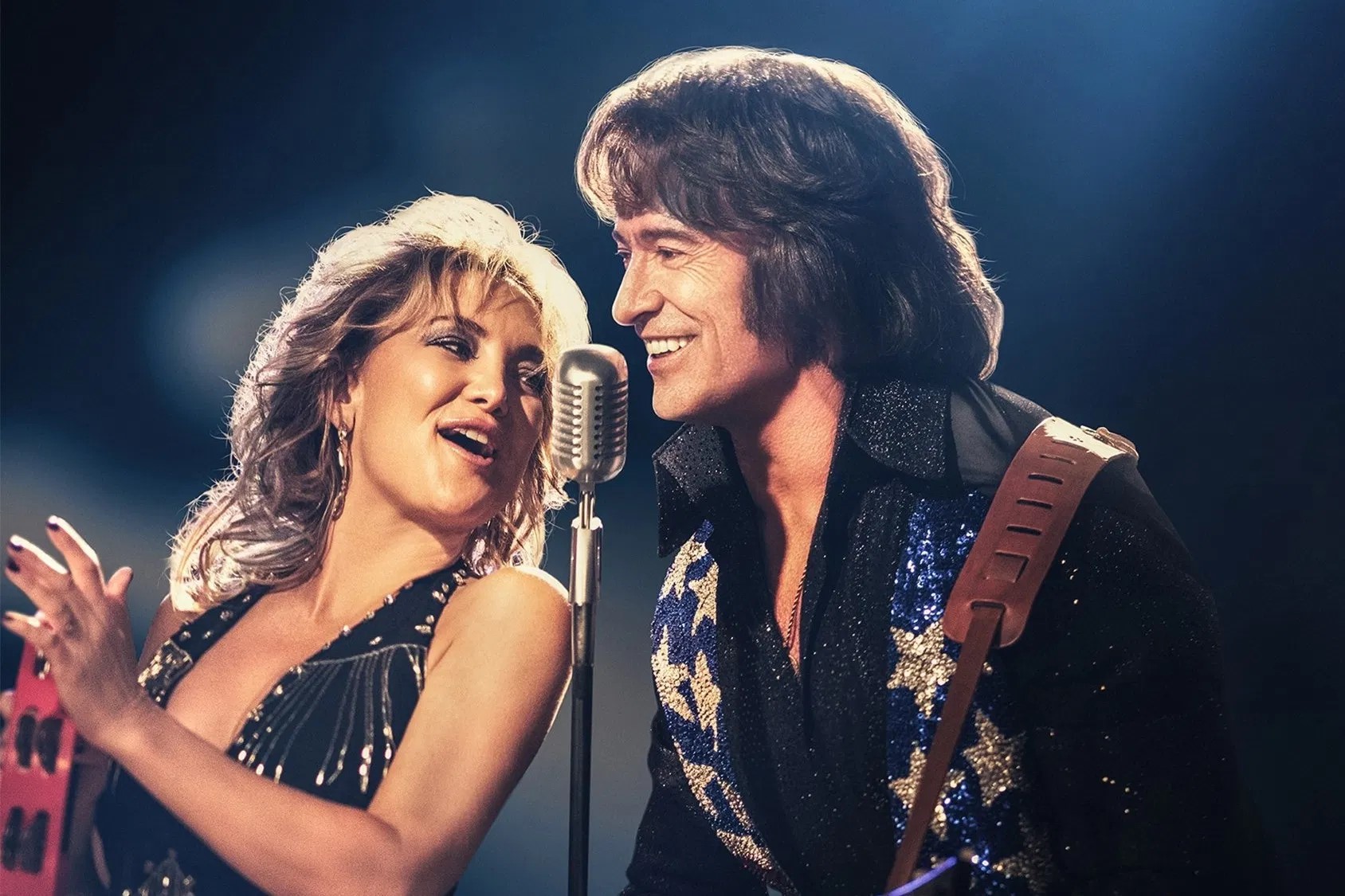
Jackman and Hudson Shine in This Year’s Most Triumphant Underdog Story
Writer Joseph J. Airdo // Phoenix Film Critics Society
There’s a moment early in Craig Brewer’s “Song Sung Blue” when Mike Sardina, played with disarming warmth by Hugh Jackman, watches Claire Stengl perform her Patsy Cline act at a dingy Wisconsin bar. His face radiates pure recognition — not just of her talent, but of something deeper: a kindred spirit who understands that performing isn’t about fame or fortune. It’s about survival. It’s about joy. It’s about refusing to let the world beat the music out of you.
That moment encapsulates everything magnificent about this film, a sweeping musical drama that arrives in theaters as one of 2025’s most stirring achievements. Based on the true story of a Milwaukee couple who formed a Neil Diamond tribute band called Lightning and Thunder, “Song Sung Blue” is a love letter to dreamers, to working-class heroes, to anyone who’s ever believed that passion and persistence can triumph over circumstance.
Jackman plays Mike, a Vietnam veteran and recovering alcoholic who works as a mechanic while gigging around Milwaukee’s dive bar circuit. Hudson is Claire, a single mother of two who cuts hair by day and channels Patsy Cline by night. When they meet, something electric happens — not just romantic chemistry, though there’s plenty of that, but a cosmic musical kinship that transforms two struggling solo acts into something greater than the sum of their parts.
The film’s first act is pure joy. Brewer, the Memphis filmmaker behind “Hustle & Flow” and “Dolemite Is My Name,” understands how music can be transformative, even transcendent, regardless of the size of the stage or the audience. When Mike and Claire discover Neil Diamond’s catalog as their shared language — when they harmonize on “Play Me” in her cluttered living room, their voices finding each other like puzzle pieces clicking into place — the film achieves a kind of magic that feels utterly authentic. These aren’t polished performers chasing stardom. They’re people finding salvation in song.
Executive music producer Scott Bomar and his team have crafted musical numbers that feel both intimately real and cinematically soaring. The Neil Diamond songbook — from “Cherry Cherry” to “Sweet Caroline” to “Forever in Blue Jeans” — becomes more than nostalgia fuel. These songs are character development, emotional expression and narrative propulsion all rolled into one. Director of photography Amy Vincent, reuniting with Brewer for their fourth collaboration, captures the performances with an authenticity that honors both the scrappy reality of small-time musicians and the genuine euphoria they experience on stage. You’ll fight the urge to sing along.
But “Song Sung Blue” isn’t content to simply be a feel-good musical. Around the midpoint, Brewer makes a bold tonal shift that some viewers may find jarring. Life, the film reminds us, doesn’t pause for intermission. Tragedy doesn’t wait until you’re ready. What makes this narrative choice so effective is precisely its abruptness — because that’s how life works. One moment you’re riding high, the next everything changes. The film’s second half becomes something darker and more emotionally complex, testing not just Mike and Claire’s relationship but their very reasons for continuing.
This is where both lead performances reveal their full depth. Hudson, earning her first major accolades since “Almost Famous” a quarter-century ago, delivers work of astonishing emotional range. She captures Claire’s manic energy and vulnerability, her fierce love for her children, her passionate commitment to music, and eventually her descent into devastating loss and depression. It’s a performance that demands and deserves recognition.
But Jackman’s work here is equally remarkable, even if it operates on a different frequency. In an age where he’s known for playing superheroes and showmen, he disappears completely into Mike — a fundamentally decent man who’s held himself together through recovery, who loves with his whole heart, who refuses to give up even when giving up would be easier. Jackman’s Mike doesn’t have big breakdown scenes. Instead, he shows us a man who carries his pain quietly, who remains strong for others even at his own expense, who believes that showing up and being present is the most heroic thing you can do. It’s a master class in understated charisma and emotional generosity.
The supporting cast adds vital texture. Michael Imperioli brings world-weary wisdom as Mark, a Buddy Holly impersonator who becomes Lightning and Thunder’s guitarist and steadiest presence. Ella Anderson delivers a breakthrough performance as Claire’s daughter Rachel, navigating the complicated terrain between resentment and love for a mother who’s both inspiring and frustrating. Jim Belushi radiates warmth as Tom, the band’s manager, while Fisher Stevens finds humor and heart as Mike’s dentist-slash-booking agent.
Production designer Clay Griffith and his team have recreated early 1990s Milwaukee with meticulous authenticity — wood-paneled living rooms with mismatched furniture, neon-lit dive bars that smell like spilled beer and broken dreams, fairgrounds that time forgot. Costume designer Ernesto Martinez walks the perfect line between the Sardinas’ working-class reality and their on-stage personas, creating Lightning and Thunder costumes that are simultaneously authentic to Neil Diamond’s aesthetic and true to what a couple with limited resources could actually afford.
Brewer’s screenplay, based on Greg Kohs’ 2008 documentary, never condescends to its characters or their circumstances. There’s genuine respect here for people who define success on their own terms, who measure triumph not by platinum records but by packed rooms of people singing along, by the electricity of performance, by love that endures through unimaginable hardship. This is a film about the American Dream reimagined — not as fame and fortune, but as passion pursued, family sustained, hope maintained against all evidence that hope is foolish.
For Arizona audiences, particularly in a region that values resilience, reinvention and the courage to chase dreams later in life, “Song Sung Blue” will resonate deeply. It’s about people who refuse to accept that their best days are behind them, who understand that it’s never too late to find love, to start over, to become who you were always meant to be. It’s about the healing power of music and the sustaining power of human connection.
The film’s 131-minute runtime allows Brewer to let scenes breathe, to give relationships room to develop naturally, to let musical numbers build to their full emotional power. Some viewers may wish for a tighter edit, but there’s value in this sprawl — it feels like spending real time with these people, sharing their journey rather than just observing it.
As “Song Sung Blue” builds toward its conclusion, Brewer makes choices that honor both the harsh realities of the Sardinas’ story and the indomitable spirit that defines them. Without revealing specifics, the film’s final act achieves something rare: a resolution that feels simultaneously heartbreaking and triumphant, realistic and hopeful, grounded in tragedy yet soaring with love.
In a cinematic landscape dominated by superheroes and franchises, “Song Sung Blue” is a reminder of film’s power to illuminate ordinary lives and reveal their extraordinary beauty. It’s a celebration of tip jar musicians, of people who work three jobs to chase their passion, of love that shows up every day even when showing up is the hardest thing in the world.
This is essential theatrical viewing — a film that deserves to be experienced with a crowd, where the collective energy of the musical numbers and the shared emotional journey amplify its considerable power. Bring tissues. Bring your loved ones. Bring your willingness to believe that dreams, resilience and love can conquer almost anything.
Craig Brewer has crafted a film that sings with authenticity, aches with genuine emotion and ultimately soars with hope. Like Mike and Claire themselves, “Song Sung Blue” proves that it’s never too late to find your song — and someone to sing it with.