

Song of the Soul
A Carefree Vocalist Finds Her Life’s Purpose — One Memory at a Time
Writer Joseph J. Airdo // Photographer Dillon Driscoll
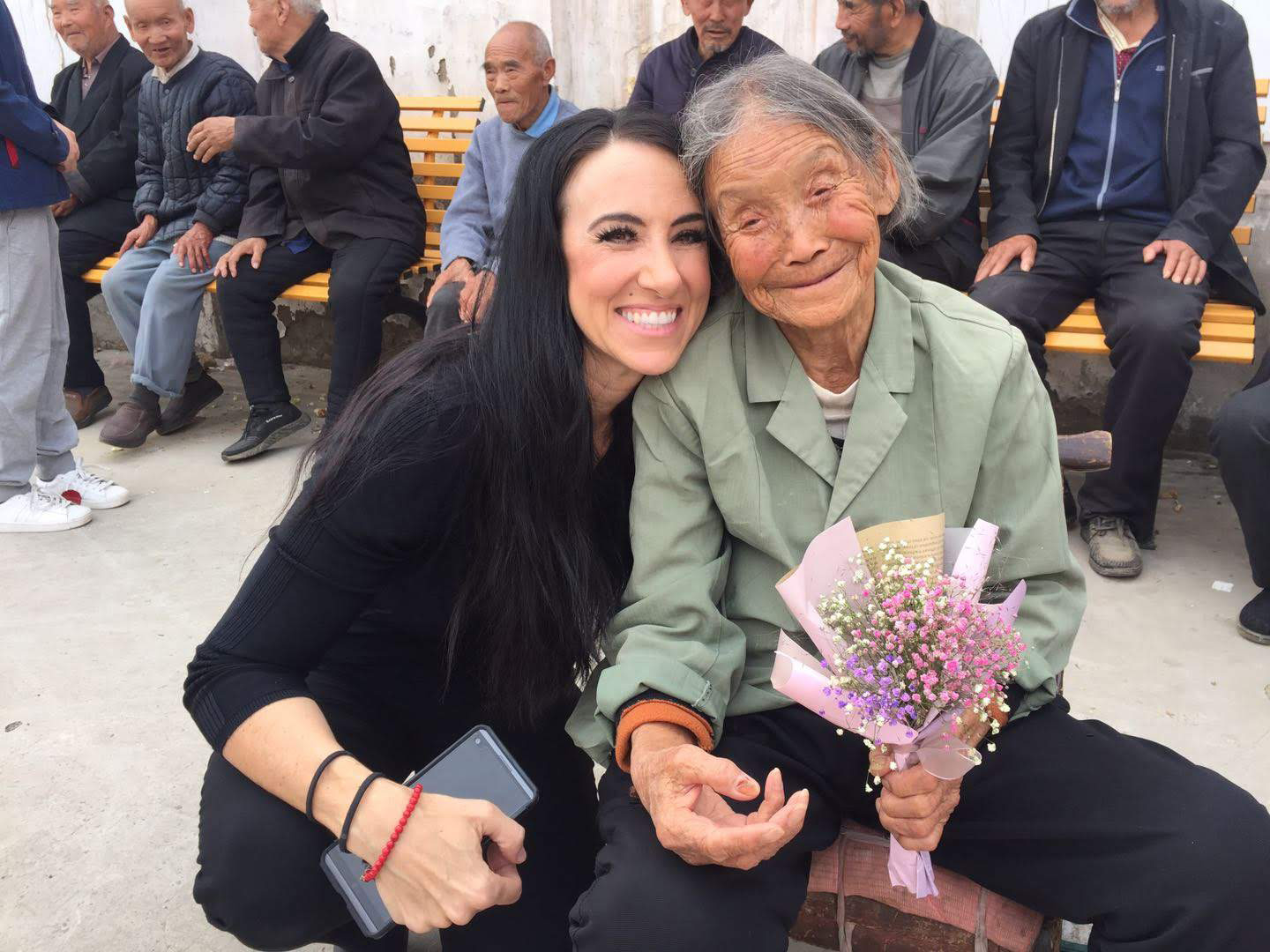
Vivian hadn’t spoken in five years. She lived in a memory care community, confined to a wheelchair, her hands beginning to turn in on themselves. But when Shannon Wallace entered the room — when the music started — something happened. Vivian moved her arms. She danced a little. She smiled.
At the end of that day’s session, Wallace sang “Let Me Call You Sweetheart” directly to her. It’s the song she always uses to close — timeless, gentle, older than either of their generations. When the last note faded, Vivian said two words.
“Beautiful. Beautiful.”
Wallace’s jaw dropped. So did the jaw of Vivian’s son, who came to see his mother every single day. He turned to Wallace with tears on his face. “Shannon,” he said, “I have not heard my mother’s voice in five years. I can’t even tell you what this means.”
That moment — not the touring, not the television career, not the two decades in marketing — is what Shannon Wallace has spent the past decade pursuing. A Carefree resident and jazz vocalist of 30 years, Wallace is the founder of Musical Memory Care, an interactive program that uses music, movement and memory games to reach people living with dementia, cognitive impairment and developmental disabilities. What began as a volunteer commitment to a single memory care community has grown into something she never anticipated: a program now serving participants in 40 countries.
It started, as the best stories often do, with a question she couldn’t answer.
Several years ago, the Arizona Commission on the Arts offered a $5,000 grant to individual artists. Wallace fit the criteria — a professional vocalist, working steadily, building toward her debut album — and $5,000 was meaningful help toward the $25,000 the recording would require. She began filling out the application. Then she hit a question that stopped her cold.
How does your project benefit your community?
“I thought, well, they can buy my music and hopefully enjoy it,” she recalls. “And then I thought — what am I actually doing for my community? Nothing, other than looking glamorous and singing in front of a 20-piece big band orchestra while husbands and wives danced together.”
She stopped the application. The question had done something more valuable than help her secure funding — it had forced a reckoning.
“I decided the onus was on me to do something for my community,” she says. “So I asked myself: who do I want to work with? And seniors have always been my jam.”
She called an accompanist friend — Charles Lewis, already a senior himself at the time, now 92 and still playing in the Valley — and together they found a memory care community to visit. Wallace arrived knowing almost nothing about the world she was entering. She learned quickly, for instance, that you don’t call them facilities.
“They’re called communities,” she says. “There’s a stigma with the word facility that the elder care industry has moved away from.”
The learning curve over those first three years was enormous. But the most important lesson came early, and it reframed everything that followed.
“I realized I wasn’t singing for seniors — I was singing with them,” she says. “It’s a ‘with,’ not a ‘for.’ They taught me more than I could ever provide, and what they provide me is a cup that runneth over, every single day.”
For two years, she showed up to that community every Monday, Wednesday and Friday — for free — while her marketing firm ran in parallel. Eventually she went to Rhonda Thiel, then executive director of a Koelsch Senior Communities property, and said there was something to this. Thiel helped her figure out the transition from volunteer to professional, and the two have remained close colleagues ever since.
Today, a Musical Memory Care workshop looks like this: chairs arranged in a semicircle, name tags on every participant, Wallace working her way around the room before a single note is played — good morning, Beth; good morning, Charlie — conducting a quiet cognitive read as she goes. She’s an entertainer, and an entertainer reads the room. Whether she’s in front of 1,000 people at a jazz concert or 15 people in a memory care community, she says, the job is the same.
The sessions blend music with movement and problem-solving games in ways that are deceptively demanding. In one exercise, participants snap, clap, touch their nose and touch their ears — then sing a song they know from the time of their life while maintaining the full sequence. That’s memory, motor coordination and lyrical recall firing simultaneously. If everyone is keeping pace, Wallace raises the difficulty. If she sees someone struggling, she dials it back.
The songs are not chosen for her own affinity with the Great American Songbook — though that’s where her heart lives. They’re chosen for her participants. Research has established what Wallace calls the “time of their life” — the music absorbed roughly between ages 16 and 30, which leaves a lasting neurological imprint and remains accessible even as other memories erode. If a participant was born in 1933, she does the math on what was popular during their formative years. Born in 1956, same calculation.
“It’s only when someone is around 90 or 95 that the Great American Songbook becomes their time of their life,” she says. “Which is really my time, in that regard, too.”
Her wardrobe is not incidental. She wears solid colors and red sneakers in every session — in person and online — because as dementia advances, peripheral vision narrows and the ability to locate a focal point breaks down. She wants to be easy to find. She wants her participants to know, before a word is spoken, that this is the same person who was here last time.
“Consistency is the point,” she says.
Vivian understood this. She was in the later stages — stage seven is what Wallace describes as the threshold of transition, where speaking and self-feeding are largely gone — but the eyes, she insists, remain the windows into the soul until the very last moment. Vivian’s eyes were always dancing.
“Music is the elixir of the soul,” Wallace says. “It doesn’t matter what song, what era, what genre. It’s a soul-to-soul relationship. And Vivian was a hundred thousand percent still in there.”
That conviction now anchors Wallace’s work in her own backyard. The second Monday of every month, she leads a free Music, Memory and Movement workshop at Christ the Lord Lutheran Church in Carefree — one of the signature programs that helped Carefree and Cave Creek earn their joint Dementia Friendly America designation this past February. Of the roughly 40 new neighbors Foothills Caring Corps meets each month, about 40% are somewhere on a memory challenge journey. Carefree’s average resident age is 70. These are her people, and she knows it.
She had to walk away from a grant application to find them. She had to ask herself an uncomfortable question in an empty room and sit with the silence until the answer came. What came back wasn’t an album or an accolade. It was Vivian. And a room full of people who, when the music starts, are still entirely, unmistakably here.
“I’ve had a lot of opportunities in my life,” Wallace says. “I love this one most of all.”
shannonwallacesings.com // musicalmemorycare.com
Music, Memory and Movement Workshop
Second Monday of Each Month // 10 a.m. // Christ the Lord Lutheran Church // 9205 E. Cave Creek Road, Carefree // Free // 480-488-1105 // foothillscaringcorps.org
Memory Makers
Carefree and Cave Creek are now officially dementia-friendly — and the designation is anything but honorary.
On Feb. 17, both communities received Dementia Friendly America designation, awarded jointly. DFA typically designates one community at a time but made an exception given how closely the two towns interact. Sherri Boozikee, neighbor engagement specialist at Foothills Caring Corps, spent months building the case — securing the support of FCC Executive Director Brent Downs, then taking it to both town councils in January. Both voted unanimously in favor.
Earning the designation requires assembling a cross-sector action team, submitting a formal application with letters of support and committing to ongoing evaluation. A launch meeting on Jan. 14 drew more than 20 community members; about a dozen signed on to form the Dementia Friendly Action Team, co-chaired by Home Instead President Kelly Cornelius and representing restaurants, churches, businesses, clinics and first responders. For participating businesses, the ask is straightforward: have staff complete a 45-minute information session and display dementia-friendly branding in return.
The designation formalizes what FCC had already been building. The Memory Cafe — held the third Thursday of every month at Good Shepherd of the Hills Episcopal Church — brings people living with dementia and their care partners together in a free, drop-in setting. Caregivers gather for peer support while participants engage in activities. Twenty-eight people attended the last one.
“We’re trying to eliminate the stigma,” Boozikee says, “and that starts with everyone understanding what this looks like and how to help.”
Memory Cafe
Third Thursday of Each Month // 10 a.m. // Good Shepherd of the Hills Episcopal Church // 6502 E. Cave Creek Road, Cave Creek // Free // 480-488-1105 // foothillscaringcorps.com