
How the West Was Worn
Costume Meets Couture at Western Spirit Museum
Writer Joseph J. Airdo // Photography Courtesy of Western Spirit Museum
The rhinestone cowboy never existed on the open range. Neither did the perfectly pressed denim or the sideburns that defined Clint Eastwood’s 1970s swagger. But stand in Western Spirit Museum this winter, and you’ll realize something extraordinary: the line between costume and couture, between Hollywood fiction and frontier function, dissolves into something far more interesting — a complex American myth told through leather and silver.
A new exhibition opening this season reveals how Western style conquered both the corral and the camera — and it’s in fascinating conversation with the museum’s ongoing collection.
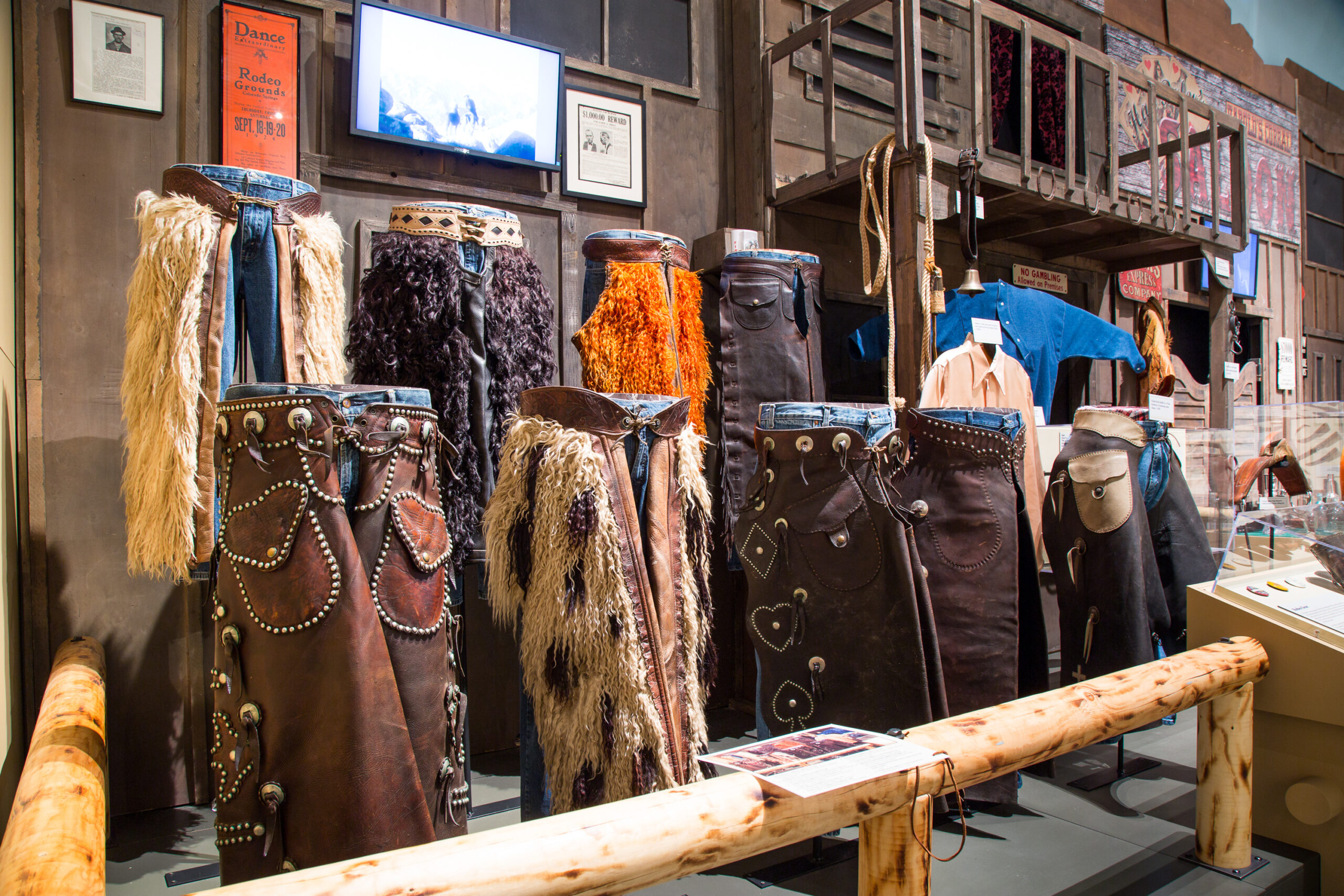
“Still in the Saddle: A New History of the Hollywood Western,” presents screen-worn costumes from John Wayne, Robert Redford, Charles Bronson and Dustin Hoffman. Meanwhile, the museum’s “Spirit of the West” collection showcases 1,400 artifacts from Scottsdale gallerist Abe Hays, including working saddles, spurs and gauntlets — pieces that required thousands of hours of tooling and engraving, rivaling any European luxury house in their bespoke craftsmanship.
“Our popular conceptions of what is historical change over time,” says Andrew Patrick Nelson, the museum’s chief curator. “If you were to see a photo of movie cowboys from the 1920s with their giant hats, most folks today would likely think, ‘Well, no, that’s not right. It’s got to be Clint Eastwood with the short-brimmed hat.’ But if I were to show you a photo of actual cowboys from 20 or 30 years earlier, they would look far more like those 1920s movie cowboys than the movie cowboys of the ‘70s or today.”
The costumes in “Still in the Saddle” tell their own story of survival and reinvention. Many pieces were never museum-bound relics but working garments returned to Western Costume Company’s warehouse, altered, aged and redeployed across multiple films. A coat worn by John Wayne in several pictures may have been modified for other productions. Charles Bronson’s jacket had been transformed multiple times before a collector acquired it.
“These were working pieces,” Nelson explains. “So these garments aren’t locked in time the way that a movie is frozen in time. They have a life of their own.”
But Hollywood’s vision was always aspirational. When “Butch Cassidy and the Sundance Kid” sparked a global trend for corduroy jackets and mustaches in the 1970s, it proved that cinema didn’t just document the West — it designed it.
The “Spirit of the West” collection offers a different kind of glamour: the uncompromising artistry of necessity. Consider the parade saddles created by makers like Edward H. Bohlin, known as the “Saddlemaker to the Stars.” These pieces feature hand-tooled floral carving and sterling silver mounting — accessories in the truest sense, comparable to a Hermes Birkin in hours invested and skill required.
“The craftsmanship in some of these pieces is truly astonishing — levels that perhaps rival European luxury accessories,” Nelson says. “A saddle, through its tooling and engraved silver or gold inlays, could tell a story about who you are.”
Then there are the spurs — particularly the California style with massive rowels and intricate silver inlay. These weren’t merely functional. They were jewelry for the boot, status symbols broadcasting wealth and skill across the range. The engraving techniques draw heavily from Mexican vaquero traditions, an artistic lineage that resurfaces in March when Western Spirit opens “From Earth to the Stars,” featuring pieces from the Richard A. Gates Collection of Native American Jewelry.
That exhibition, featuring visionaries like Charles Loloma and Jesse Monongya, will trace how Spanish silverworking techniques merged with Indigenous aesthetic systems — another story of adaptation, innovation and the transformation of utility into high art.
“We approach the Western as a truly multimedia genre here at Western Spirit Museum,” Nelson says. “By treating Western art as holistically as we can, we get to incorporate all these different traditions and begin to make connections between them.”
Bell-bottoms or buckskin, rhinestones or rawhide — each iteration reveals what makes Western iconography endure. It’s powerful not because it’s simple, but because it’s complex enough to mean different things simultaneously. The cowboy hat isn’t just a hat. It’s a piece of American bespoke design, equally at home on a Hollywood soundstage or on the open range, forever adapting while somehow remaining unmistakably itself.
Still in the Saddle: A New History of the Hollywood Western
See website for hours // Western Spirit Museum // 3830 N. Marshall Way, Scottsdale // $28; discounts available // 480-686-9539 // westernspirit.org