

Ephemeral Echoes
Writer Joseph J. Airdo // Photographer Joseph Cyr
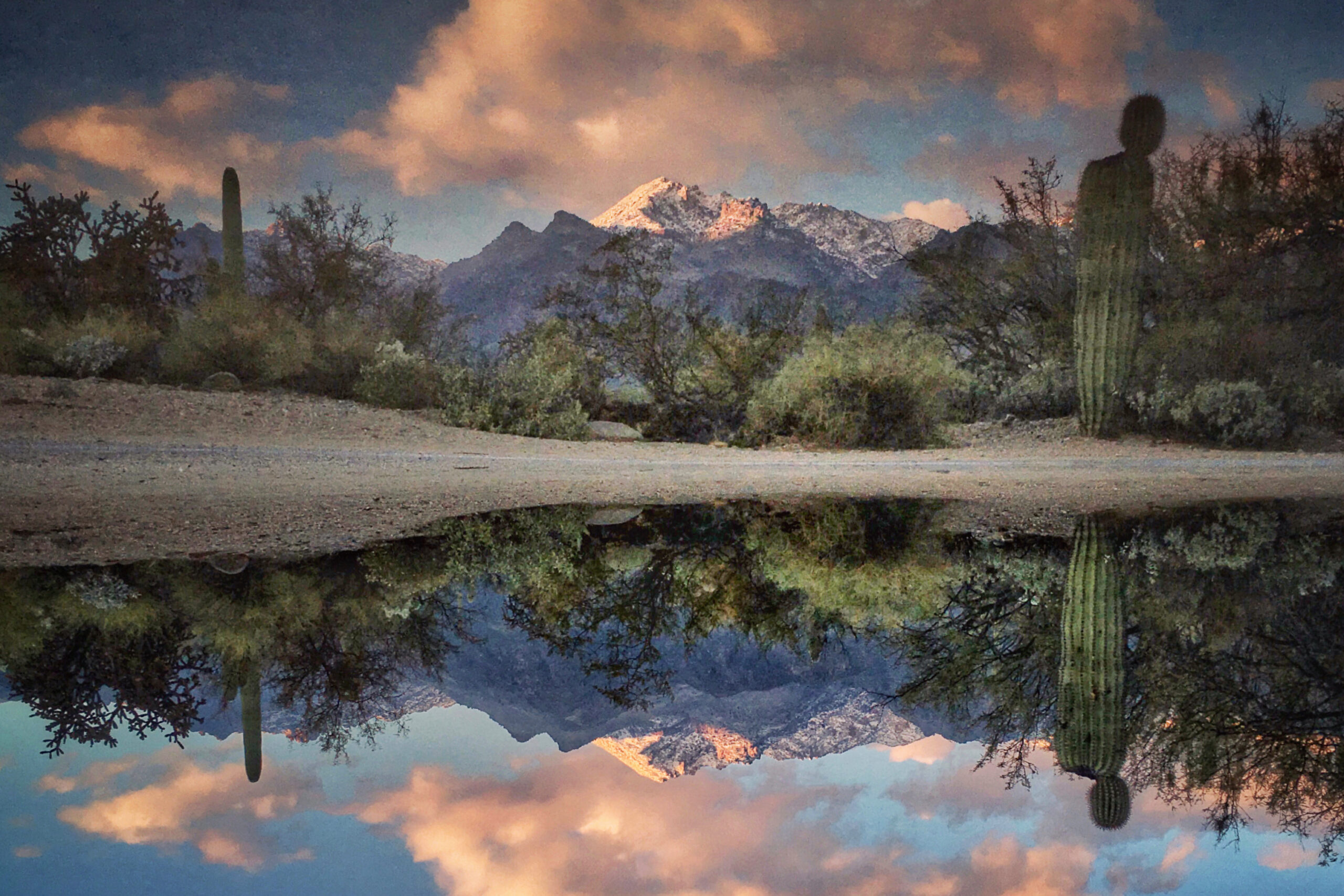
In the Sonoran Desert, water is a miracle. A reflection is the echo of that miracle.
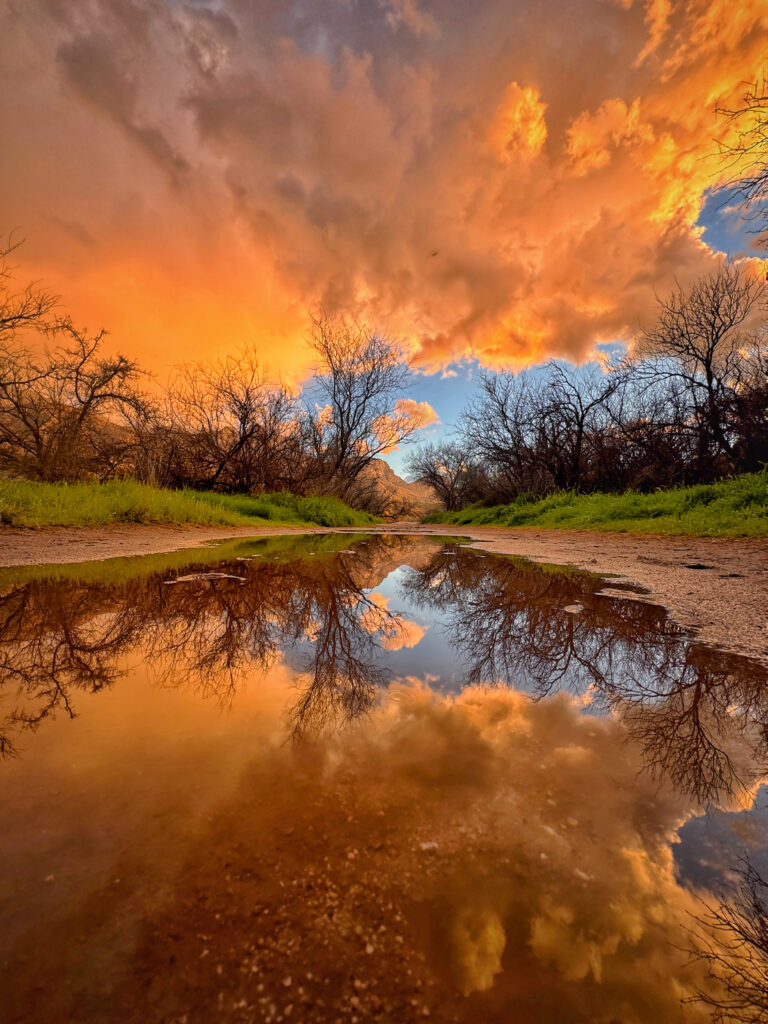
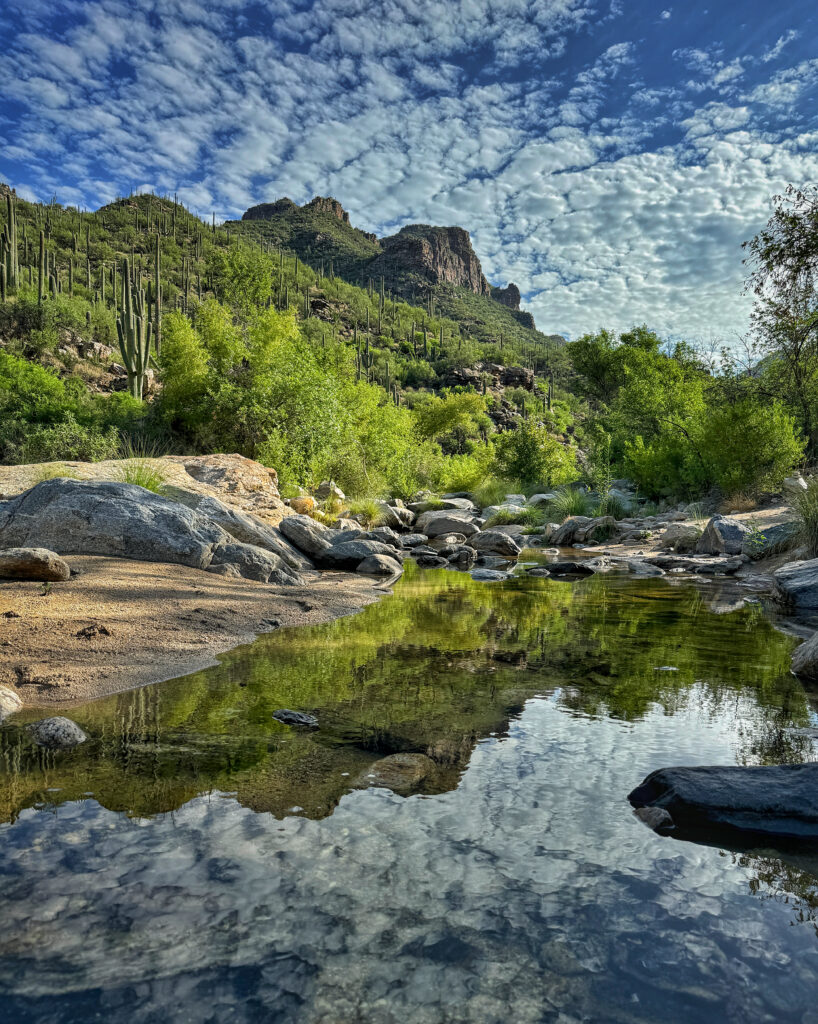
When rain finds its way to the washes and trails around Arizona — whether from winter storms or summer monsoons — something magical happens. Puddles form — ephemeral, fleeting, destined to vanish within hours under the relentless sun.
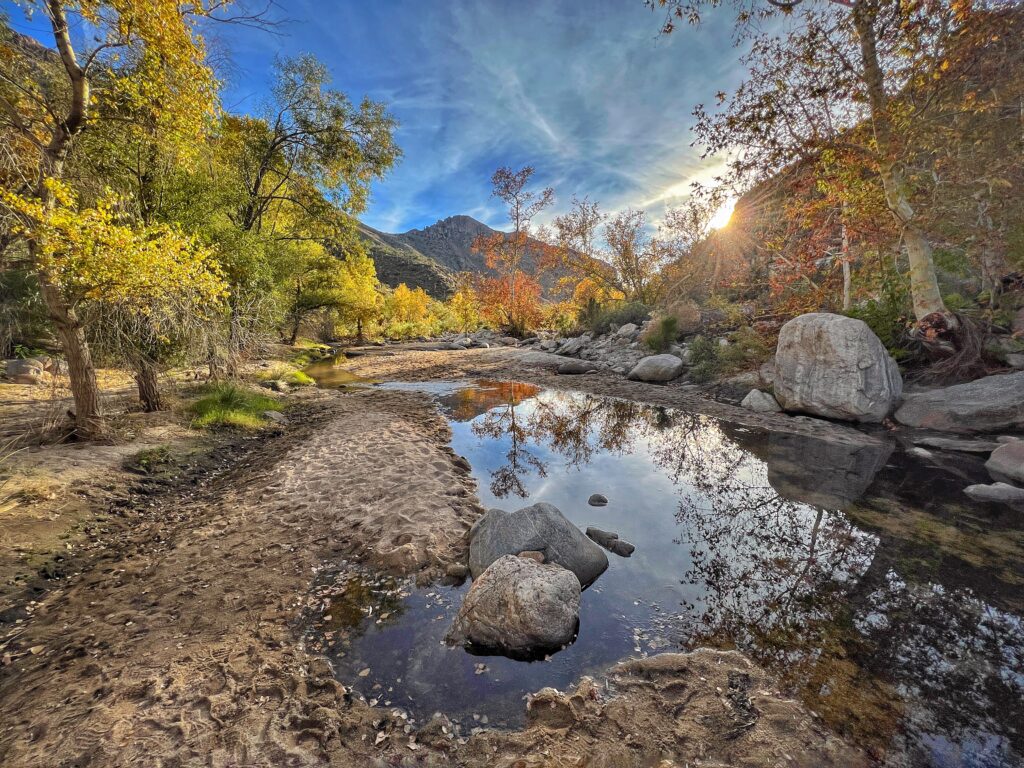
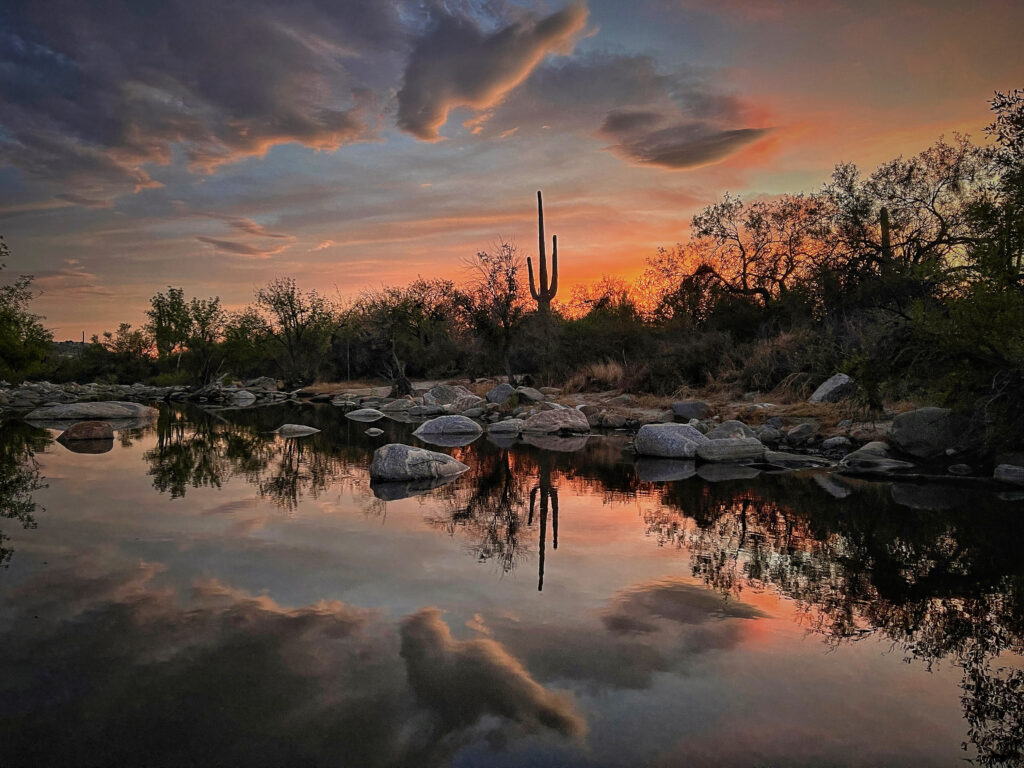
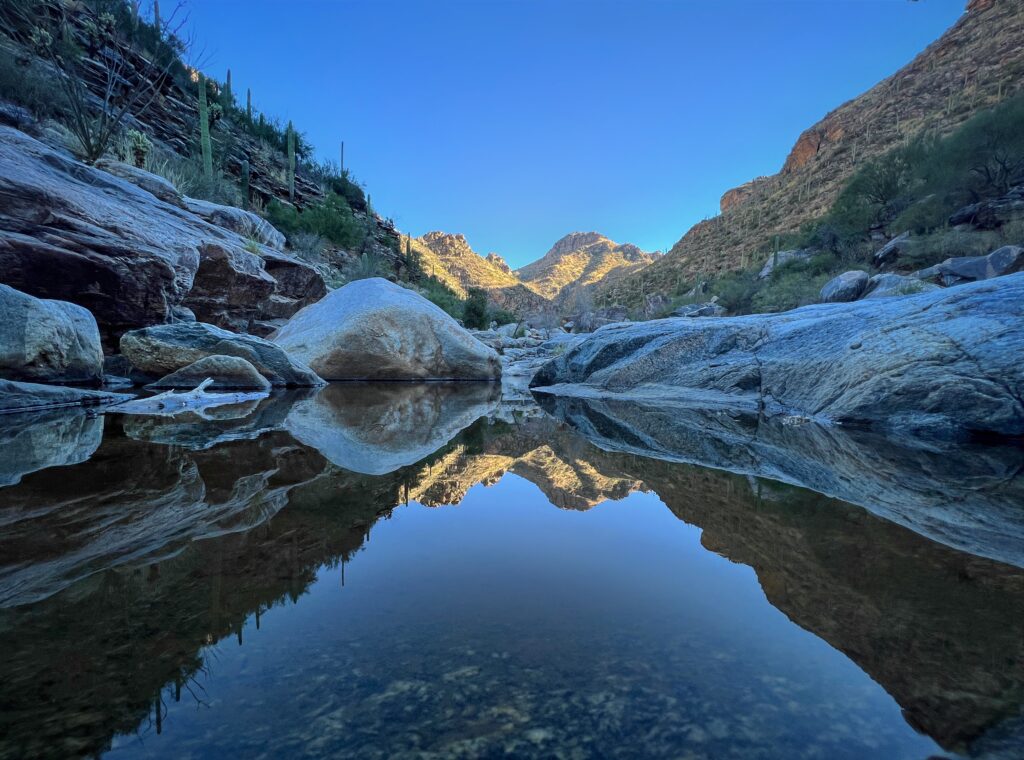
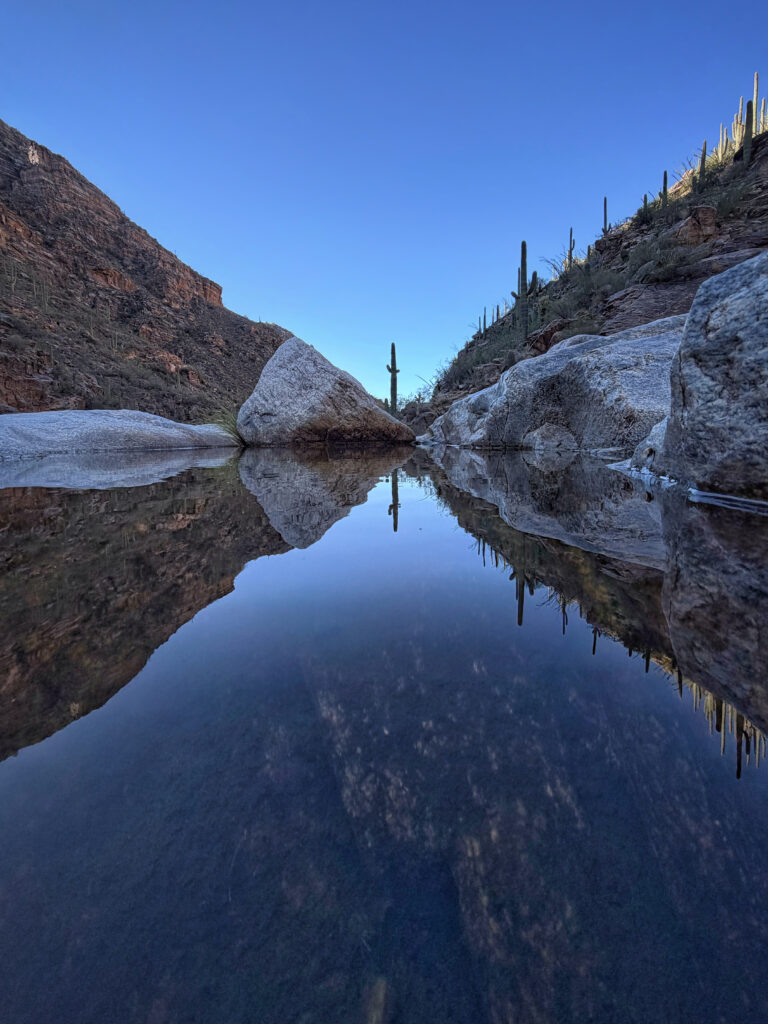
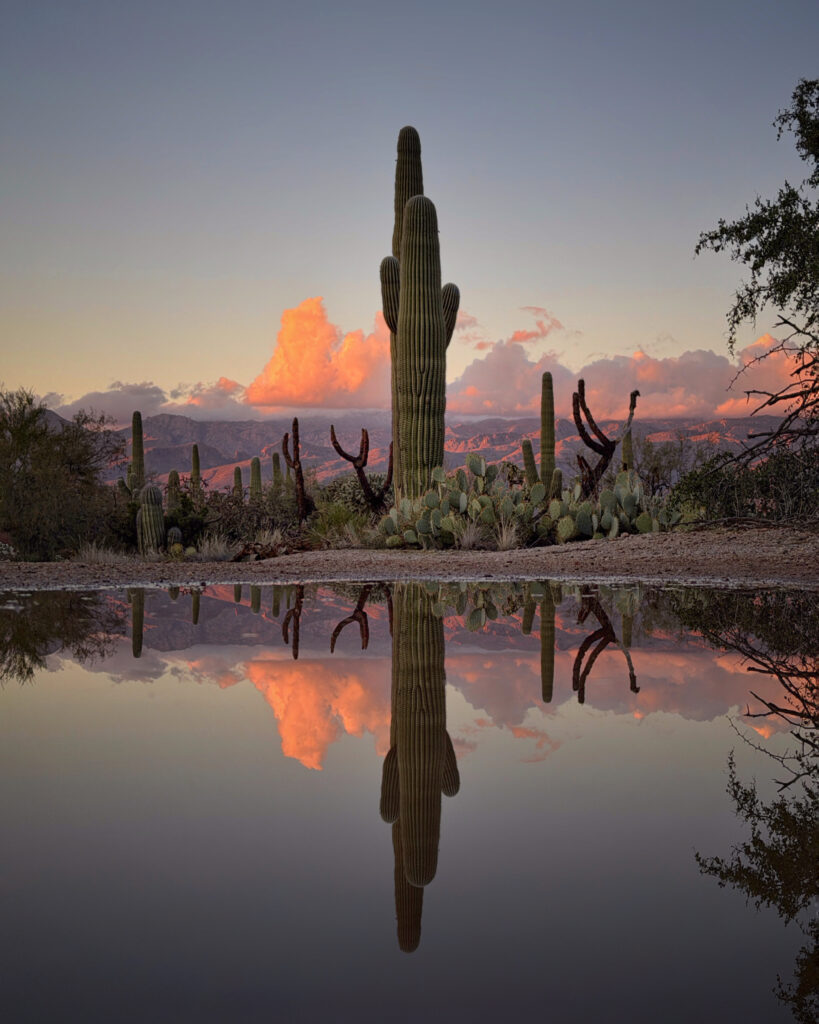
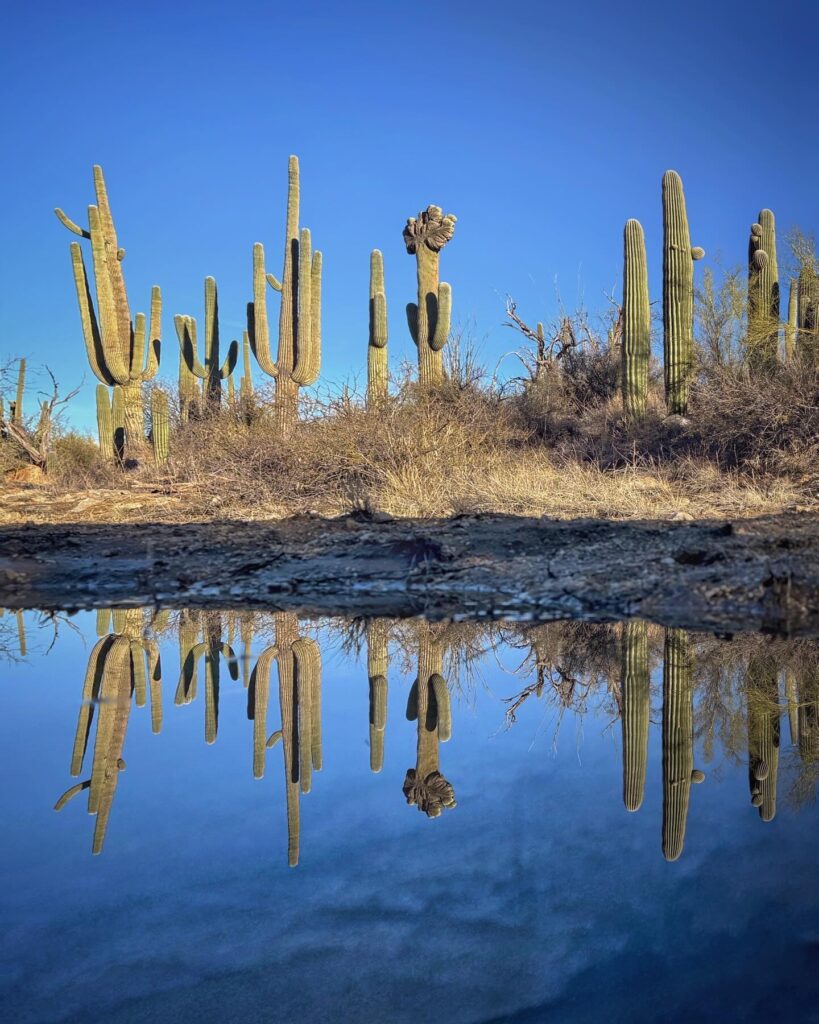
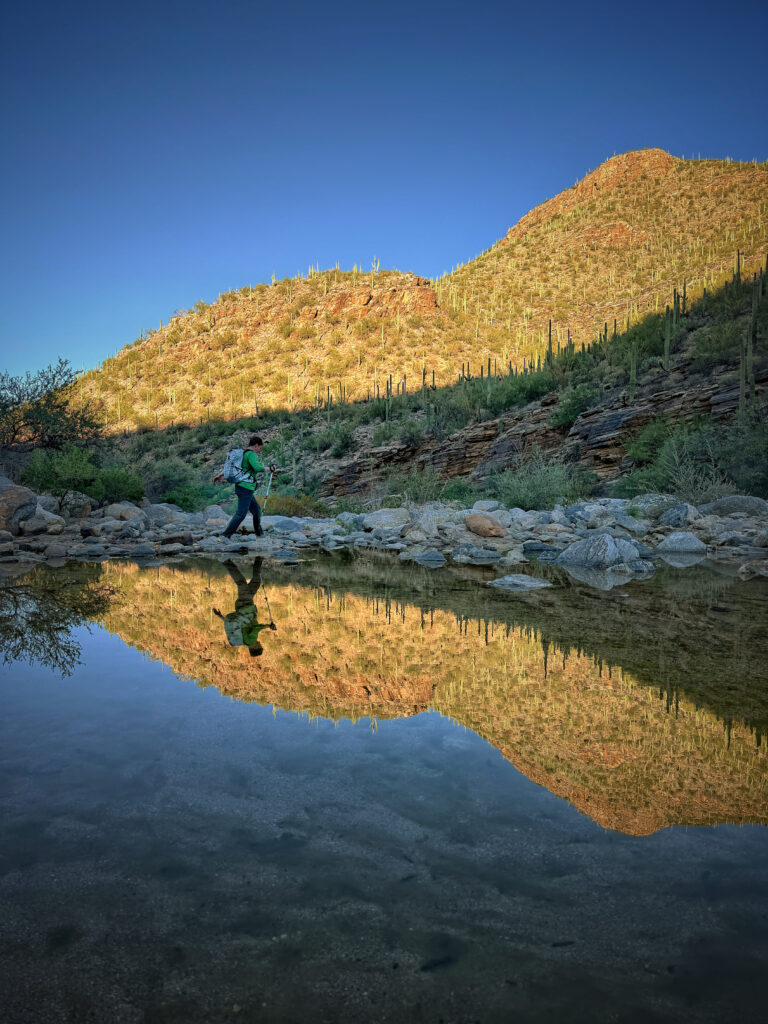
But in those brief windows, photographer Joseph Cyr finds his muse. Armed only with an iPhone and a willingness to get his knees muddy, he crouches low, angles his lens toward the water’s surface and captures something extraordinary: the desert reflected back on itself, transformed into symmetrical, alien landscapes that feel both familiar and impossibly strange.
This collection of images represents years of chasing those rare moments when the dry landscape holds water long enough to create perfect mirrors. The result is a visual Rorschach test: pareidolia at play as saguaros and rock formations double and twist into abstract compositions that transcend simple documentation.
“Reflections, by mirroring a given subject, create interesting and unexpected wholes,” Cyr explains. “The human eye is naturally drawn to symmetry, and in the desert, where water is scarce, happening upon it always feels like a gift.”
The logistics require intimate knowledge of place. After nearly two decades of hiking and running Tucson’s trails, Cyr knows exactly where water pools after storms — which bends in the washes collect runoff, which trail dips transform into temporary ponds. The serendipity now lies not in finding the water itself, but in what the light and weather happen to be doing when he arrives.
“That’s exactly why desert reflections are so worth finding and photographing — they freeze the ephemeral, distill a unique vantage point, capture something momentarily substantial before it vanishes,” he says.
Meet the Photographer

Joseph Cyr’s path to the Sonoran Desert was anything but direct. Born in Seoul, he spent formative years traversing continents — living and working in France, Georgia, Seattle and Nicaragua before finding himself in southern Arizona. Those early memories lingered, and in 2007, after visiting friends in Tucson, Cyr and his wife made a decisive choice: the desert would be home.
By day, Cyr inhabits the high-energy world of high school language teaching, where extroversion is essential. By dawn and dusk, he retreats to the trails with his iPhone on a wrist strap, seeking the quiet introverted restoration that landscape photography provides.
“I truly enjoy the energy of young people, but after a day spent in extrovert mode, the introversion that landscape photography fosters is definitely welcome,” Cyr says. “Both teaching and photography hone one’s observation skills, and both require openness to spontaneity, but photography and time outdoors help me refill the tank so I can be refreshed for a new day.”
His choice of tool — the smartphone rather than expensive professional equipment — was born from necessity and circumstance. A 2011 trip to Asia coincided with his first smartphone purchase, and he began recognizing the device’s photographic potential despite its limitations.
“Despite its limitations, it allowed such spontaneity, while also training me to look at light and composition more carefully,” he notes.
That training paid dividends. Cyr’s mobile photography has placed in international competitions, been published in multiple magazines, been featured on Apple’s Instagram feed and exhibited in several countries. Most recently, his work appeared in Tucson’s Decode Gallery in the Barrio Viejo as part of an exhibition entitled “Light & Shadow” and in Porto, Portugal, as part of the “Mira Mobile” prizes celebrating smartphone photography.
instagram.com/allophile_ // fineartamerica.com/profiles/joseph-cyr