
Bagged & Tagged
Blue Bird’s Textile Transformation
Writer Joseph J. Airdo // Photography Courtesy of the Heard Museum
Walk into any Fry’s, Safeway or Bashas’ across the Valley, and you’ll find it stacked near the baking aisle — a humble flour sack bearing a cheerful bluebird inside a circle. For many shoppers, it’s simply a pantry staple. But for Diné families and Indigenous communities across the Southwest, Blue Bird flour is something far more resonant: a symbol of home, resourcefulness and cultural identity that has transcended the kitchen to become an unlikely fashion icon.
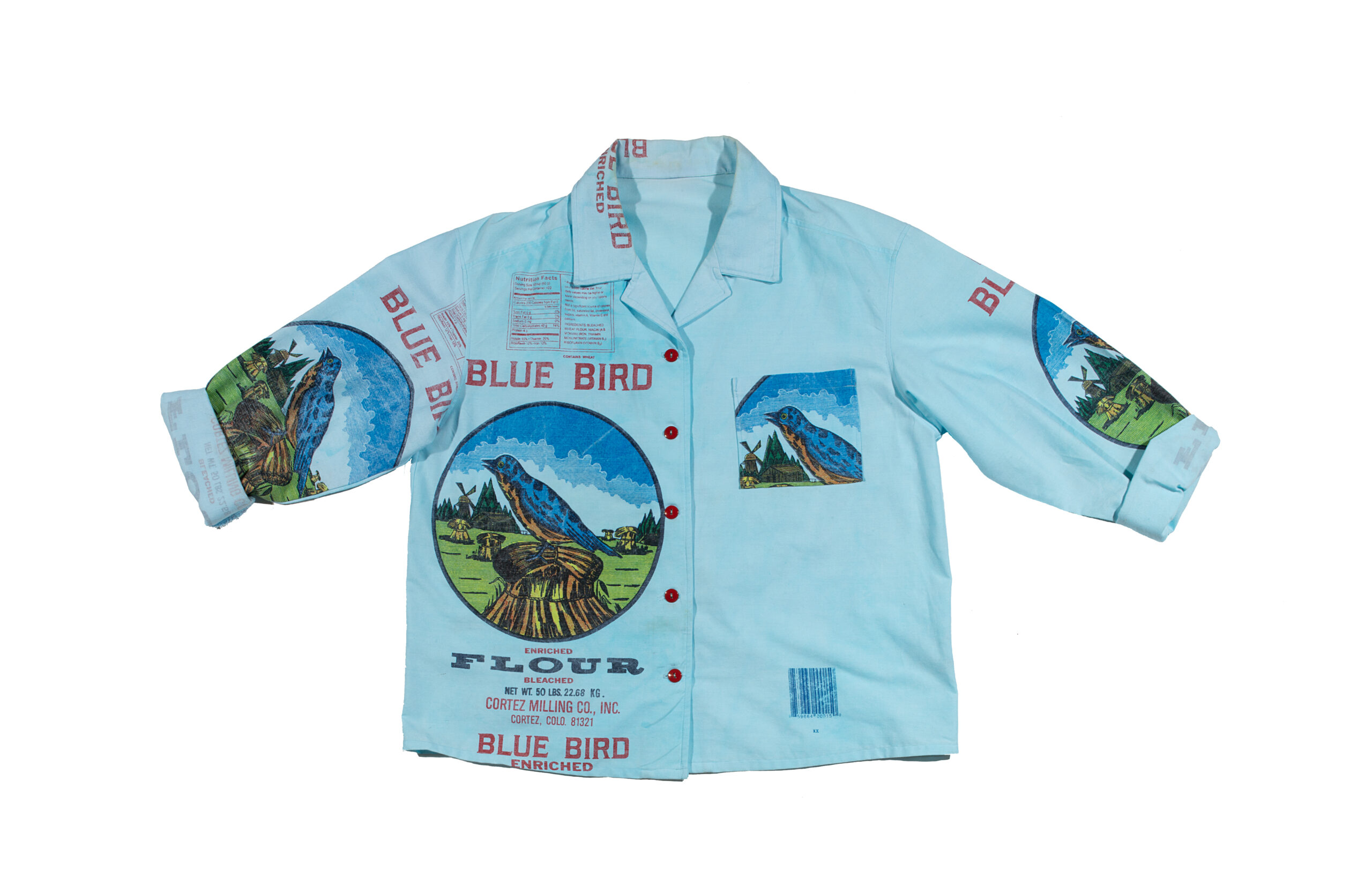
Opening Feb. 6 at the Heard Museum, “Blue Bird” traces the remarkable journey of Cortez Milling Co.’s signature product from treasured fry bread ingredient to contemporary Indigenous fashion statement. The compact yet illuminating exhibition features button shirts dyed in vibrant pinks and blues, floor-length skirts paired with denim jackets, hand-stitched tote bags and even face masks — all crafted from the distinctive cotton flour sacks that have been a fixture in Native pantries since the company’s founding in the 1930s.
“Blue Bird flour is something we often use — we meaning Native people — for fry bread and tortilla recipes, especially out here in the Southwest,” says Olivia Barney, the exhibition’s curator. “But what I’ve come to learn is it’s pretty much beloved throughout Indian Country.”
Barney, whose Diné (Navajo) family introduced her to Blue Bird during childhood visits to the reservation, grew up watching her grandmother transform simple ingredients into culinary tradition. Those early morning lessons — kneading dough to the perfect consistency, watching it react with hot grease — were never just about food. They were about continuity, resourcefulness and the art of making something meaningful from what’s available.
“That’s what my grandma used,” Barney recalls. “I still remember that experience of her teaching me to make fry bread. These moments — they’re just an everyday part of life. And I think that’s why it becomes so important. Blue Bird has incorporated itself into our everyday lives in that way.”
But the exhibition reveals how that everyday connection extends far beyond the kitchen. The same cotton sacks that once held high-gluten flour have become canvases for contemporary Indigenous designers, who transform the iconic logo into wearable art. It’s a practice rooted in economic necessity — during the Depression, resourceful matriarchs from a wide range of cultural backgrounds sewed flour sacks into dresses and shirts when fabric was scarce — that has evolved into something more complex: a deliberate reclamation of identity through fashion.
“When we talk about artistry and what Native people do, we reimagine things,” Barney explains. “We’re not going to just toss it out. We’ll use it for something else. You love this thing and you want to use it for something else instead of throwing it away. What can you make from it?”
The physical quality of the fabric itself tells part of the story. Despite initial assumptions about burlap-like heaviness, the cotton weave is surprisingly lightweight and soft — comfortable enough for daily wear. Artists such as Toni Williams use Rit dye to transform the natural beige sacks into jewel tones, then cut and assemble them into contemporary silhouettes that range from business casual to streetwear cool.
“When I saw the denim jacket by Kathleen Tom-Garcia, I thought, ‘I love that,’” Barney says of one piece featuring a Blue Bird back patch. “You get to see a wide range of what’s possible.”
The exhibition also includes paintings depicting the fry bread-making process and pre-colonial Indigenous bread traditions, contextualizing Blue Bird within a longer continuum of Native culinary creativity. It’s a reminder that resourcefulness and reinvention aren’t new concepts — they’re ancestral practices finding fresh expression.
“There are two separate but connected things happening in this show,” Barney notes. “On one hand, I want to talk about fry bread and pay homage to those cooking traditions. But I also want to showcase this beloved art form in different ways — specifically, the repurposing of the flour sacks themselves.”
For visitors who might recognize the logo from powwows or restaurants serving Navajo or Indian tacos, the exhibition offers a deeper understanding of why this particular brand has become what Barney calls “an everyday part of our lives.” It’s not merely nostalgia or clever marketing — it’s the visual language of survival, adaptation and pride.
“It goes back to those core concepts of community, reusing and upcycling,” Barney says. “Whether it’s the food or the clothing, it always comes back to the people: the gathering, the connection.”
In an era of fast fashion and disposable culture, Blue Bird’s journey from flour to couture statement carries particular resonance. These aren’t garments born of trend cycles or algorithm-driven aesthetics. They’re testaments to Indigenous ingenuity — proof that fashion, at its most meaningful, is never just about what we wear, but about who we are and where we come from.
Blue Bird
9:30 a.m.–5 p.m. // Heard Museum // 2301 N. Central Ave., Phoenix // $26; discounts available // 602-252-8840 // heard.org