

Music to His Years
Vietnam Veteran Turns Life’s Soundtrack Into Literature
Writer Joseph J. Airdo // Photography Courtesy of Doug Bradley
The field house at Bethany College is winding down toward its final song when the dean of students pulls Doug Bradley aside. April 4, 1968. A small town in the West Virginia hills, a Thursday night crowd that came out to see Dionne Warwick — and Warwick is about to come offstage. The dean leans in: Martin Luther King Jr. has been assassinated. In Memphis. About an hour ago.
Bradley is 20 years old, the school’s social chairman, responsible for bringing 19 acts to this tiny campus in just over two years. He drove Warwick from the airport himself. He knows she’ll want to do one or two more songs. He also knows, from the faces he can already see, that something is wrong.
This is the kind of moment that doesn’t belong in anyone’s college years. And yet there it is — the first chapter in what will become a lifetime of intersections between music and history, between songs and the events they outlast.
Bradley, a Vietnam veteran and part-time Phoenician who lives near Piestewa Peak, published “The Tracks of My Years: A Music-Based Memoir” in August 2025. The book — which earned the Vietnam Veterans of America’s 2025 Excellence in Arts Award and drew blurbs from Pulitzer Prize winner David Maraniss and “Matterhorn” author Karl Marlantes — organizes a life not by dates or milestones but by songs. Each chapter takes its title from a track that shaped it. The companion 46-song Spotify playlist is essentially the table of contents. And what that playlist contains — Sinatra giving way to doo-wop giving way to Motown giving way to Hendrix — is the arc of postwar American music history, lived from the inside.
“Music has always been there for me,” Bradley says. “But the turning point, absolutely, was Vietnam. Music was what we needed to cling to, to keep us alive, to keep us connected to one another, to the rest of the company, to the rest of the world.”
The story begins in Philadelphia, where Bradley grew up listening to his father croon big band standards and his older brother rehearse doo-wop with street-corner groups. When the family relocated to the Pittsburgh suburbs, Bradley assembled a 45 RPM collection and spun records at high school dances. He was, in other words, exactly the kid who would end up social chairman at Bethany College — a tiny school in Bethany, West Virginia, where he ran for office on a promise to bring Smokey Robinson and the Miracles to campus.
He won. And on March 5, 1967, Smokey showed up.
“I was 19, 20 years old,” Bradley recalls. “You’re a young kid and these are your idols. You just want to do right by them and not screw up.”
The concert went off without a hitch — and then, as the Miracles were leaving, someone said they wanted to play some ball. Smokey sat it out. But Bobby Rogers, Pete Moore and Ronnie White followed Bradley into the gym, found a ball, and played two-on-two in dress shoes on the hardwood.
“It was like being in church,” Bradley says.
That night was one of 19 concerts in just over two years — Jefferson Airplane, Count Basie, Sam and Dave, the Fifth Dimension — that made tiny Bethany an unlikely musical oasis in the West Virginia hills. But none of them prepared Bradley for the night Dionne Warwick came to town.
She had canceled twice before — November 1967, then January 1968 — before finally honoring her contract that April. Her band had flown into a small regional airport separately, so she committed to one long set and gave everything she had. The crowd was full. The night was good.
Then the dean intercepted Bradley near the stage.
“I could see she could already tell by looking at the people right there that something was wrong — we were just shaken,” Bradley says. “So I said, ‘I’m so sorry. This is terrible. Dr. King —’” He didn’t need to finish the sentence.
“It was remarkable how she got strong, got strong in an instant,” he says. “She said, ‘I need to sing. I have to get this out.’”
She never got the chance. A local sheriff, worried about unrest, ordered the lights up and the field house cleared. The audience filed out not knowing why. Warwick left without singing another note.
“I think we all would have been healed by what she needed to sing that night,” Bradley says. “It never happened because somebody decided it was going to be too risky.”
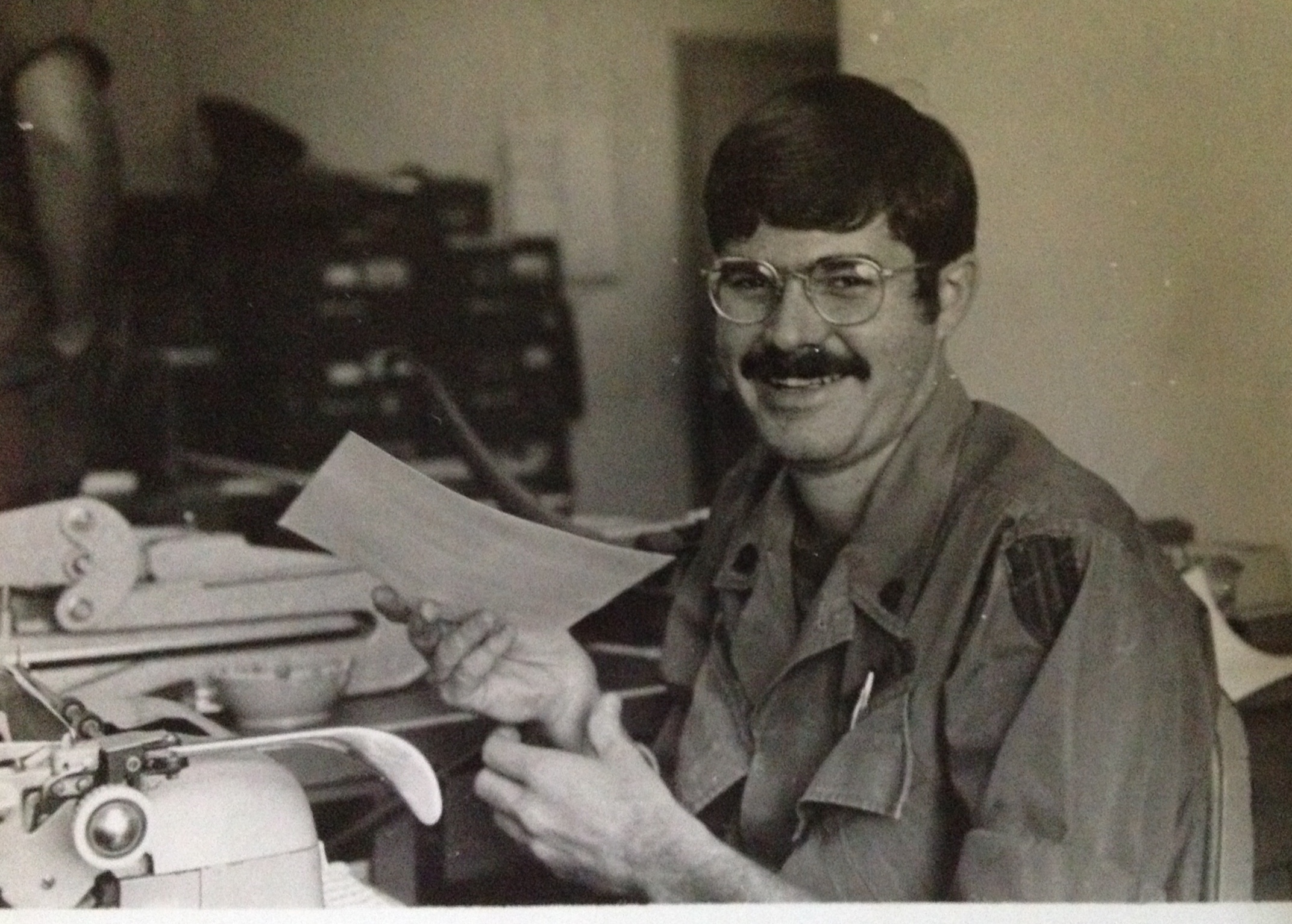
A year after that night, he was drafted. He aced the Army’s aptitude test and earned assignment as a journalist, eventually landing at U.S. Army headquarters in Long Binh, South Vietnam, from November 1970 to November 1971. Nixon had signaled the American withdrawal was coming. Nobody wanted to be the last GI killed in Vietnam. So they kept their heads down — and they listened.
“Everybody had a radio, everybody had records, everybody had tape decks,” Bradley says. “Vietnamese bands, Korean bands, music coming from every direction. Some guys listened to country, a lot of us listened to Hendrix. Whatever it was, it was what we needed to fight and stay alive.”
“The Tracks of My Years” doesn’t stop at the music. It also moves through the complicated personal terrain that makes any memoir worth reading — including a prolonged, unresolved relationship with a high school teacher who opened the teenage Bradley’s eyes to Bob Dylan and the Beatles, and whose intentions Bradley is still working to fully understand.
The book took 10 to 12 years to assemble, built from memory, journals and verification calls to family members. He had to make sure he got the early songs right, he says — “16 Candles,” “Smoke Gets in Your Eyes,” Sinatra — songs he confirmed with his brother and parents while they were still alive to ask.
Vietnam changed everything, he says, but not only in the ways you’d expect.
“I had to learn patience,” he explains. “I had to learn forgiveness. And I think about where we are now as a country — this division, this fracture. It feels as serious as anything since Vietnam, maybe the Civil War. If you can find something to hold on to — music, memory, food, family, whatever it is — hold on.”
Bradley has found that something, both in his writing and in the life he’s built near Piestewa Peak, where he teaches continuing studies courses at Arizona State University on music, Vietnam, memoir and memory. He speaks about his adopted state the way he speaks about the music that sustained him in Southeast Asia — with the gratitude of someone who knows exactly what it means to need something and find it.
“Everybody’s got their own soundtrack,” he says. “You’re up, you’re down, you’re here, you’re there, and through all of it, music is what connects you to yourself.”