

From Hockey Rinks to Honky-Tonks
Americana Troubadour Jai Graves Is Done Waiting
Writer Shannon Severson // Photography by Cheri Pyles and Yorg Kerasiotis
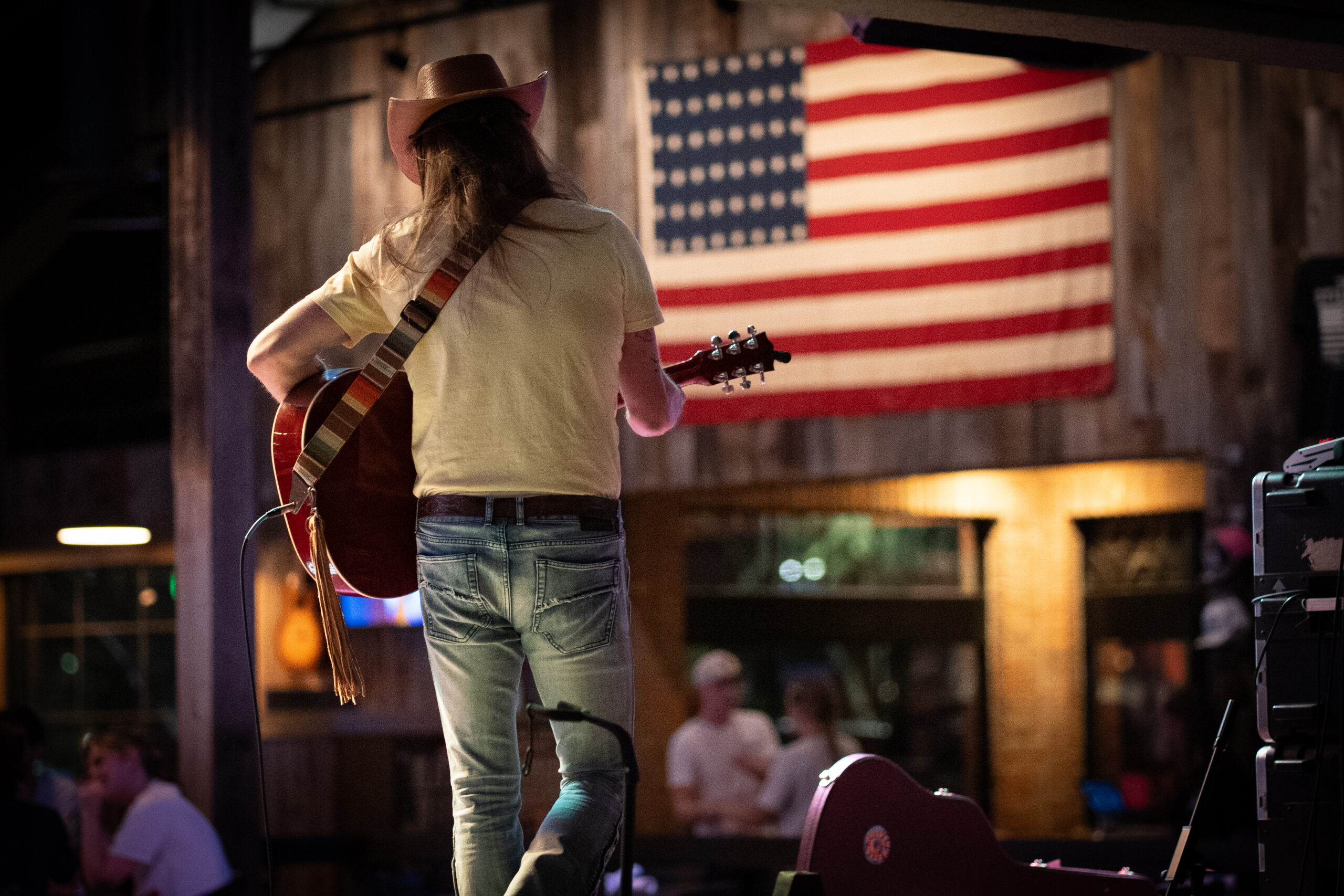
As he stood beneath the spotlight with a roaring audience filling his ears, Jai Graves did something unusual — he took off his signature dark sunglasses and cowboy hat, showing his sincere gratitude at a turning point in his career. The country and Americana musician claimed his 2025 Rising Star Award after nine weeks of competition — and 42 years of honing his talent.
“I don’t think I’ve ever felt that moment before of, ‘I’m doing the right thing,’” he recalls. “That level of ‘Wow — this is real! I’m getting recognized for what I do.’ I’m not sure I’ve ever felt so humbled.”
“I play onstage with sunglasses and usually wear a hat. I have anxiety and being in a room in front of hundreds of people is really hard for me. I took them off to show people how much it meant. It was a big moment.”
He’s come a long way. His grandfather let him play with his banjo at age four. As a boy, he taught himself to strum his father’s guitar upside down, left-handed like Jimi Hendrix. He grew up playing hockey with his three brothers and played goalie before thousands of fans at the University of Kentucky. That’s where he debuted onstage at a Lexington wine bar — playing Steve Miller and Dave Matthews Band covers.
“They offered me $50 and all the wine I could drink — I didn’t even like wine at 18, but it was free,” he laughs. “My audience was 30 rich people drinking wine, eating cheese and listening to some dumb kid with a fake ID who really didn’t know how to sing. Really nice people. I eventually quit hockey; I realized girls like guys with a guitar and all their teeth.”
The support from Graves’ family has propelled him throughout the journey, and he estimates he has close to 5,000 shows under his belt. The grandfather who gave him free run of every instrument — banjo, fiddle, pedal steel, mandolin — are people he will always credit.
“My grandpa was the coolest dude you’d ever meet in your life. He never told me no — I could pick up any instrument. For a child, when you find something that inspires you like that, it’s about as good a blessing as it gets.”
His first foray into the professional arena — an American Idol audition on the South Side of Chicago — ended in heartbreak. At one point, he set music aside entirely, came to Arizona and built a successful career as a yoga teacher and stretch therapist in Paradise Valley and at the area’s luxury resorts.
“My life is a dichotomy — half in wellness and half debauchery — playing in bars with everyone getting drunk,” he observes. “I was giving music a break but now it’s back at the forefront.”
All of it led to this turning point. He’s let the day job fade and is now a full-time musician, playing 300 shows annually.
After the thrill of an invitation to Austin’s South by Southwest this spring, he reflects on that moment on the Foley Ranch stage and all it set in motion. He was honored to perform at the inaugural Arizona Desert Country Music Awards in November 2025. Despite a full backup band onstage, he chose to go it alone.
“I stood up and it was just me and my guitar in front of all the best people in my industry — it was a pretty stupid move,” he says with a laugh. “I was the only artist who got to play original music. If I had let the band play it would have sounded way bigger. I’ve always been a solo performer. I’ve gotten used to playing alone in the lineup between two big bands and I love it.”
Graves says he’s shed the stage fright that comes with inexperience, and many hardscrabble years have built his resilience.
“A lot of people have no idea of the roots of my music. I spent years in Detroit getting my ass kicked and playing for $50. I’ve played behind chicken wire; I’ve been robbed.”
Scottsdale, he says, is much nicer than Detroit. The sunglasses still help.
“It gives me a shield and allows me not to worry about what’s going on in front of me.”
With the Rising Star Award, landmark performances and a development contract in hand, Graves is setting his sights on what’s next: a debut album with studio time split between Detroit and his adopted hometown of Phoenix, slated for release this summer.
He’s writing his own music, playing multiple instruments and collaborating with a local songwriter. In Michigan, he’ll record with producer and instrumentalist Yorg Kerasiotis and “Country Hop and Roll” artist Louie Lee, with other Detroit musicians potentially joining the sessions. The interplay between collaborators — and the adrenaline of composing from a single line that arrives without warning — are both part of what the process demands.
“The recording process is such a different thing from performing. It takes a lot of time and focus. I know what the song looks like when I write it and I know what it looks like when these people help me finish it. I put different songs away for different producers. I’ve learned a lot through the process. I’m taking my time with it but I also want to get it done. I’m in the zone.”
The sound? Tough to classify, he says — country mixed with Southern rock Americana, somewhere in the territory of Grammy winner Sturgill Simpson.
“I don’t write ‘bro country,’” he says. “I write music that’s real to me. I think I’d be called alternative country. I feel confident these songs are really good. This is my life and what I want to do. That’s why I’m going so hard.”
Arizona has been good to Graves — not just for the gigs he plays around the Valley each week, but for how the landscape has shaped his songwriting.
“Riding horses, cactus and dirt and dust and clear skies — all that is country music,” he says. “Just being outside. Country music gets me away from technology. It’s like, ‘Let me put my phone down and listen to this album.’”
He’s not alone in believing Arizona country is on the verge of something larger.
“Arizona is really developing an awesome country music scene,” he says. “There are some people who want to make this a little Nashville; they’ve put me on the radio and have been so good to me. I think Arizona country is really going to be a force in the next five to 10 years. You’re going to see a bunch of people coming from the greater Phoenix area.”
The sunglasses go back on. The hat goes back on. And Jai Graves walks out to do it again — another stage, another room full of strangers who don’t know his name yet. That’s the part that drives him, the part no award or development contract fully explains. Arizona gave him the landscape and the community. Detroit gave him the scars. Kentucky gave him the hunger. Now all of it is headed into a recording studio, into a debut album that’s been 42 years in the making. He’s not waiting to see how it lands.
“If I don’t do it now,” he says, “it’s never going to happen.”
Jai Graves
Friday, May 15 // 5–8 p.m. // Copper Bull // 30855 N. Cave Creek Road, Cave Creek // Free // jaigraves.com