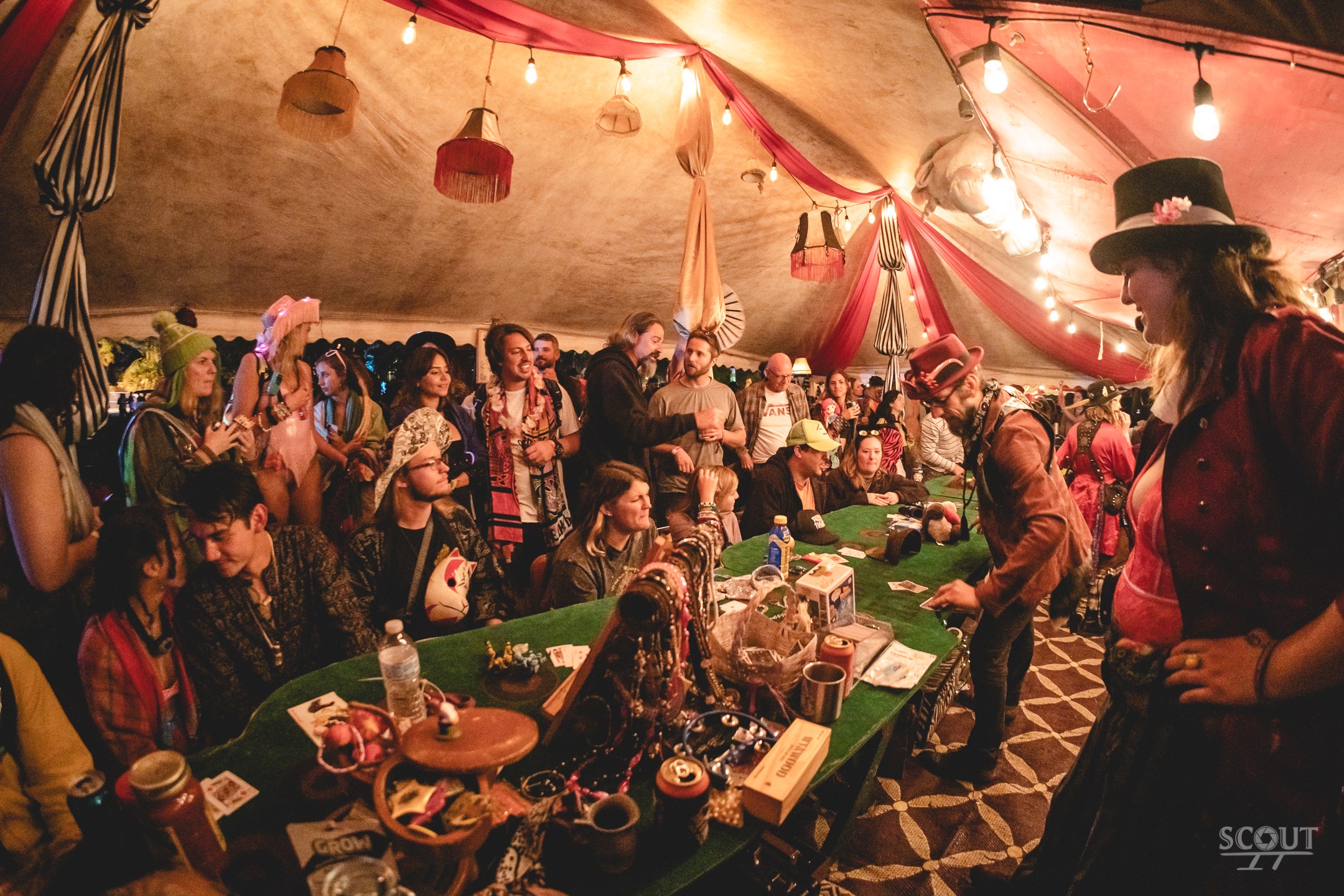
Night settles over the Arizona Canal, and a steamer trunk starts to move. Weathered leather unfolds panel by panel until the luggage becomes furniture: a 12-foot gaming table, lit and ready for a hand of blackjack that was never really about the cards. The dealer deals. Players ante up, but nobody reaches for cash. The currency tonight is a story, a favor, a small keepsake pulled from a pocket, and a camera overhead sends every wager across the water to a glowing television set, tuned to a 1950s living room that exists only here, on the canal bank.
The installation is “The Way The West Was Sold,” one of 11 large-scale artworks sharing this year’s Canal Convergence, Scottsdale Arts’ free, 10-night celebration of light and public art returning to the Scottsdale Waterfront Nov. 6-15. The event’s 2026 theme, Western Nature, asks each piece to reckon with the environmental and cultural landscapes of the American West. This one does it by selling the myth back to the people who came to see it.
The title winks at “How the West Was Won,” the 1962 epic largely filmed at Old Tucson Studios and still counted among Hollywood’s great westerns. Where that film sold triumph, this installation sells the sale itself: a wall of posters promising fortune, a newspaper shouting opportunity, a radio spinning tall tales, four performers playing period snake-oil salesmen and broadcast advertisers who work the crowd toward one glowing promise, try your luck and go west. Follow it far enough, and the promise lands you at the trunk, the table and a round of cards that turns out to be a very different game than advertised.
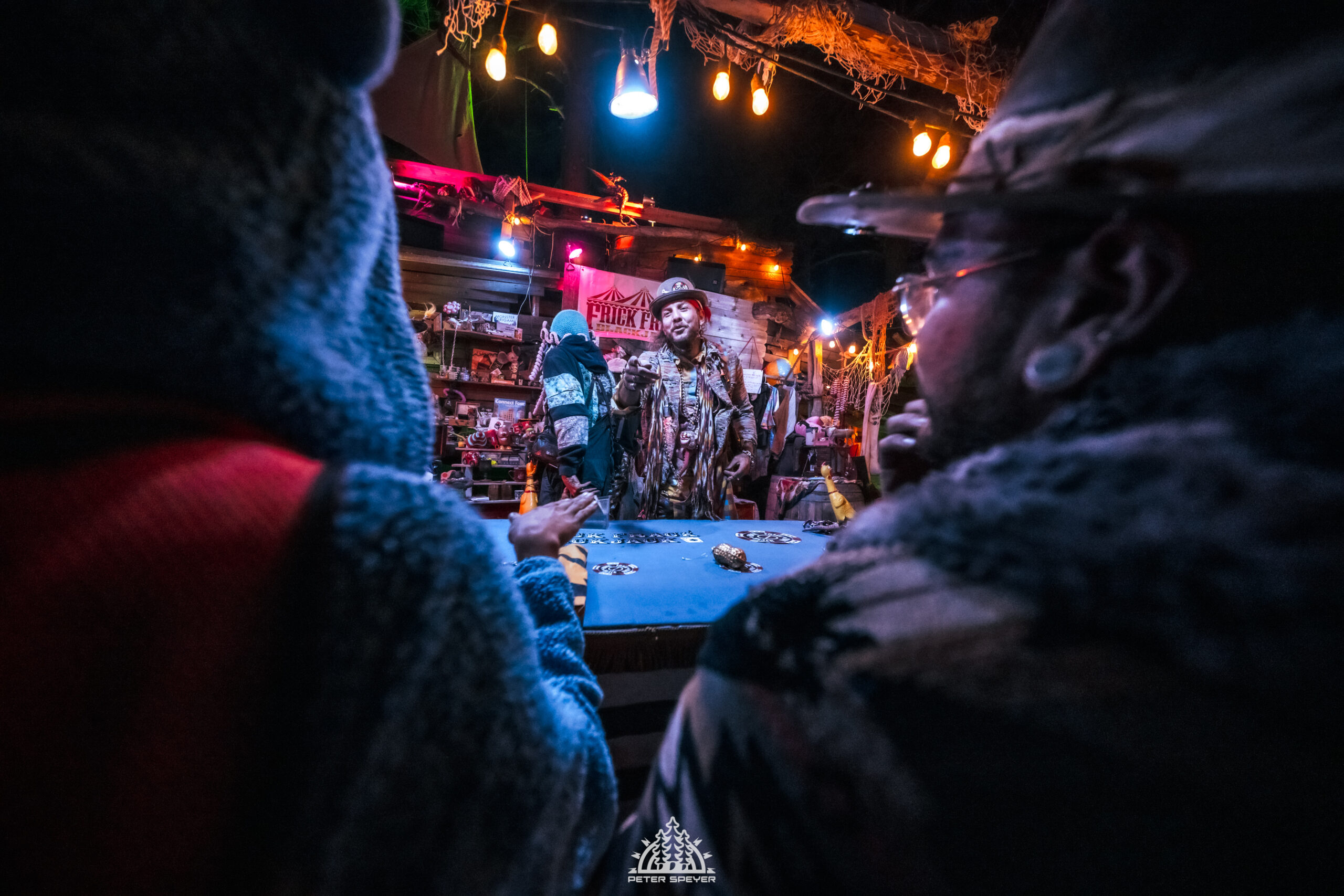
“The title shifts the question from how the West was won to how its image was sold,” Jacob “JoJo” Glinski says. “There’s a real affection for Western storytelling in this piece, alongside curiosity about who shaped those stories and what they promised. The con gives that exploration a playful form. You follow the promise of striking it rich and arrive at a table where a story, a small treasure or a connection with a stranger can become the thing that matters.”
Glinski founded Jolly Productions in 2017 to build large-scale interactive installations, live events and immersive performances. Dottie Soldati joined as artistic director in 2024, bringing two decades as a theater artist with credits that include the American Repertory Theater, Taylor Mac’s “A 24-Decade History of Popular Music,” “Alone: An Existential Haunt,” the Oscars red carpet, Burning Man, Lightning in a Bottle and June Jam. Together, the two have built a studio defined by turning audiences into participants, fusing hand-built fabrication, live broadcast, game design and performance until strangers become collaborators and spectators become the show.
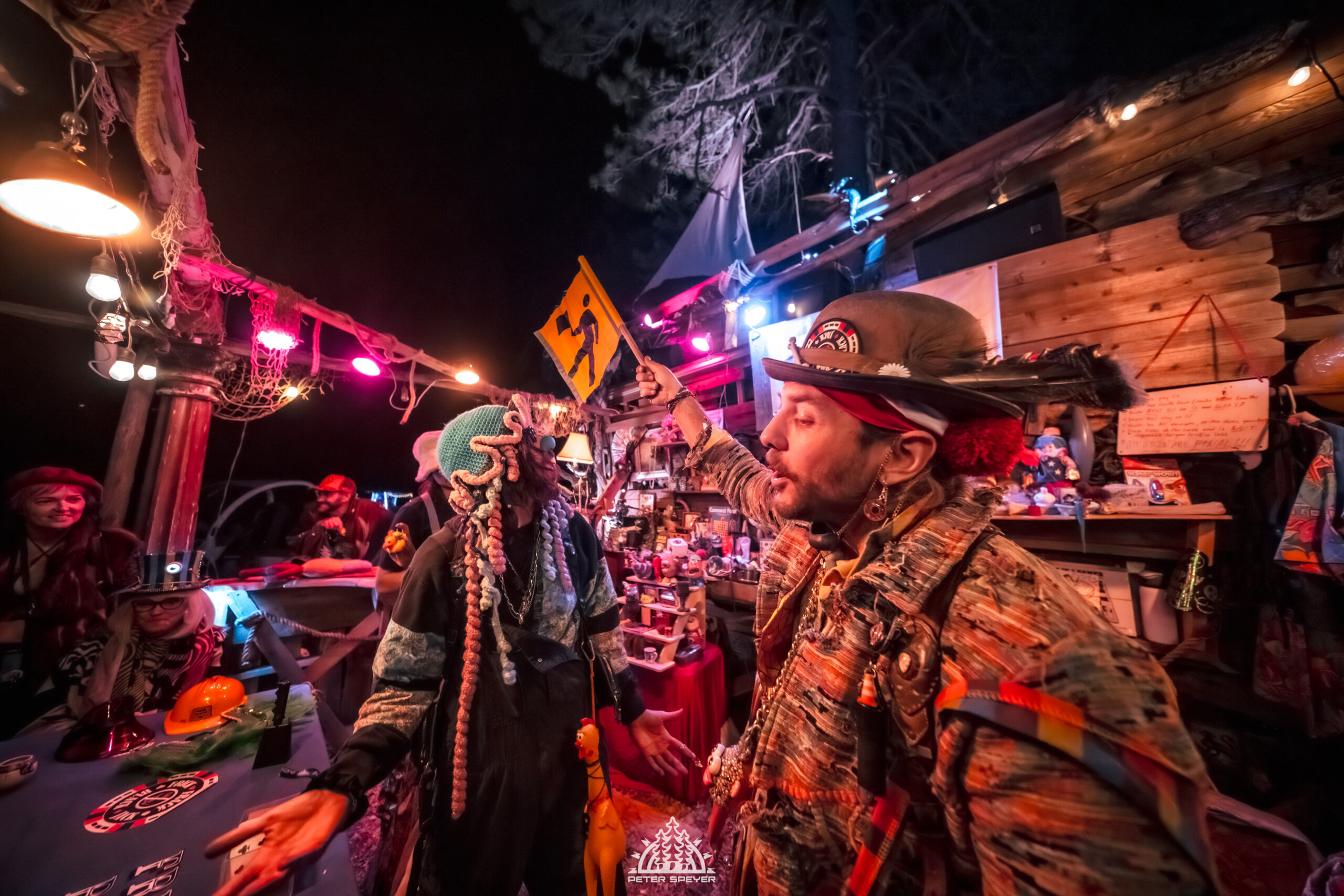
Soldati’s path to the workshop came by way of family. “My one requirement for moving to Arizona was a workshop, a garage or a shed,” Soldati says. “I’d inherited all my dad’s tools, still back in New Hampshire, so we got a place here in Phoenix with my workshop and his old table saw and drill press. My nephews come in while I’m working, and it feels like I’ve come full circle.”
The trunk carries its own bit of history. A steamer trunk earned its name from a specific job: it was built and sized for travel on passenger steamships, a hard-shelled promise that whatever mattered most could survive the crossing. This one survives a different crossing nightly, unfolding from luggage into a gaming table after dark and folding itself back into a trunk by day, an old-timey Transformer built for a new kind of game.
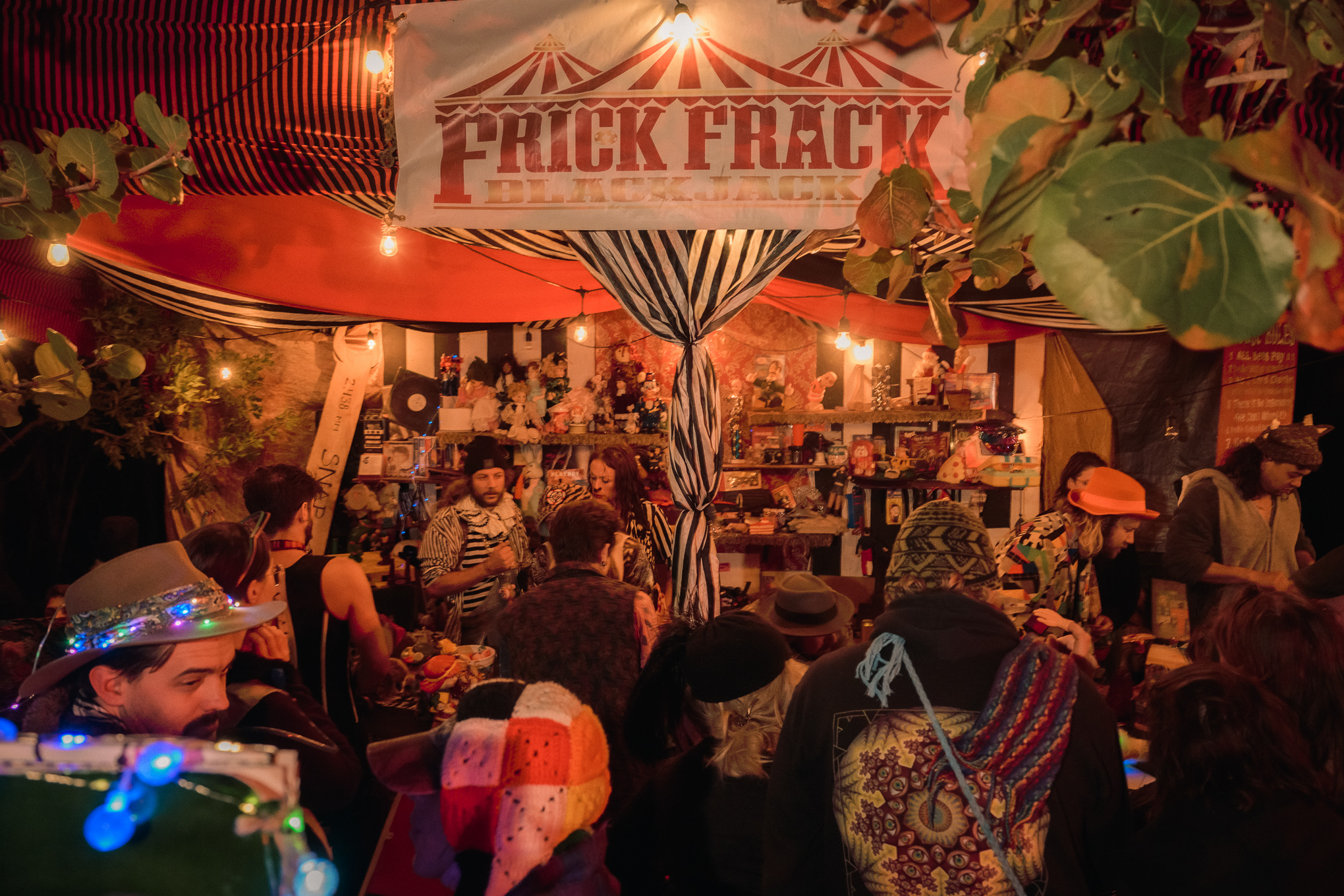
That game has a name of its own: Frick Frack Blackjack, born not from design but from an injury. Performer Marvelous Marv sprained an ankle at the Trading Post at Lightning in a Bottle and started dealing blackjack so he’d have a reason to sit down while he worked.
“I wish everyone the benefit of having nothing to lose when something cool comes along,” Marv says. “I was down and out, searching for my next thing, and I stumbled onto something that fit like a glove. I’ve never known where this project would go, I just pointed myself toward a heading. Luckily, it’s brought me some of the most interesting people I know, and they’ve helped guide it and grow it.”
The installation is a play on a con older than the performers playing it. Gambling was outlawed across the Arizona Territory in 1907, five years ahead of statehood, an attempt to make the Wild West look respectable enough to join the Union. It didn’t take. The games kept running anyway, just like the broadcast loop inside “The Way The West Was Sold,” which closes on its own small truth: what visitors walk away with was never the fortune they were promised. It’s a stranger, a story, a seat at the table.
“We hope people leave having laughed with someone they didn’t know, shared something about themselves and reconsidered what makes something valuable,” Glinski and Soldati say. “The cards give people a reason to sit down; the exchange gives them a reason to connect.”
“I call it metaphysical recycling, having something turn from valueless to invaluable,” Marv says. “The reason people keep sentimental objects isn’t because of the thing itself, it’s because the thing reminds them of something. I always tell people never to gamble with things they love, but everything else is just stuff.”
Beyond the installation, Glinski and Soldati are developing a larger vision through Old Tucson Reimagined, an effort to preserve the historic film backlot where “How the West Was Won” shot six decades ago while imagining its next chapter as a living world of art, performance and discovery. Its Western streets, saloons and familiar movie sets could become places where visitors step into unfolding stories, resident artists create new experiences and strangers become part of the town’s daily life. What begins with a seat at the blackjack table opens toward an entire world to explore, a frontier where the story keeps growing and everyone has a part to play.
Ten other large-scale works share the canal this November, each taking its own read on Western Nature. Returning artist Walter Productions brings “Western Fire Garden,” a floating Sonoran Desert tableau in fire, light and sound, with signature fire performances choreographed live at 6:30, 7:30 and 8:30 p.m. nightly. Calgary’s True North Absurdities contributes “Prairie Fire,” a life-sized rearing horse visitors can set ablaze with the push of a button. Utah’s In Theory Art Studio brings “grandmother turtle,” built, says founder Emily Nicolosi, to let “light art spark genuine curiosity about our natural environment.” Shaoyu Su x LedPulse’s “Another Slice of Reality: An Evolving Nature” changes shape with every visitor who steps into it.
The programming around the art runs just as deep. At the Nationwide Innovation Zone, Indigenous and Latinx artists lead workshops in natural-pigment painting, beading and bandana printing. The Scottsdale Arts Roundabout at Marshall Way gathers community partners including CALA Alliance, Monarca Center for Healing and Justice, Art Heals Arizona and Western Spirit: Scottsdale’s Museum of the West.
“For Canal Convergence, I wanted to create a space where the roundabout could hold many forms of knowledge, memory and collective imagination,” says Yaritza Flores Bustos, community engagement coordinator for Scottsdale Arts Learning & Innovation. “I invited organizations whose work is deeply rooted in Arizona’s communities and whose practices engage questions of belonging, migration, land, climate, healing, cultural memory and place.”
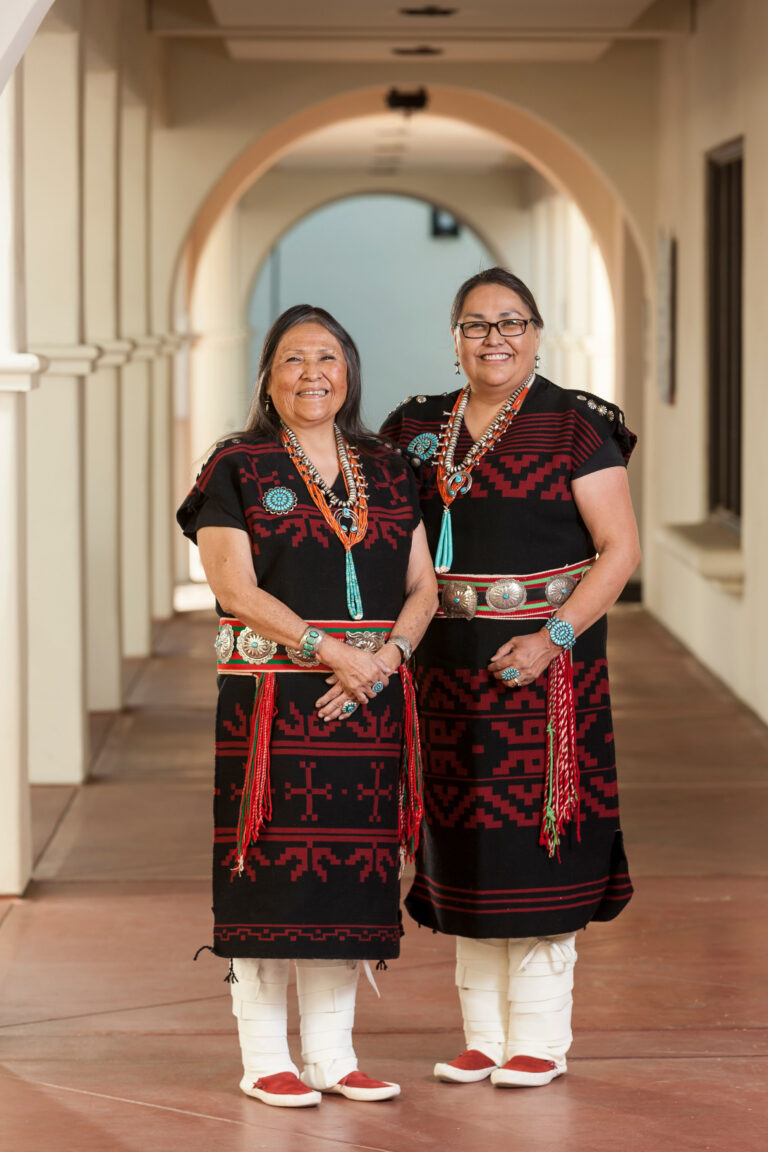
The Dress-Up Space returns as “Working West,” curated by Phoenix designer Jeremy Arviso alongside Diné hatter Geri James and Diné weaver Gloria Fain. “‘Working West’ is an invitation to customize, create and wear your story,” Arviso says, with a selection of the collaboration’s garments taking the Herberger Stage during his Nov. 12 fashion show, which shares the bill with Arizona State University FIDM students’ “Wearable Wilds.”
Live music, food trucks and the Canal Convergence Beer and Wine Garden run nightly at Soleri Plaza, with weekend headliners QVLN and Nodaway, while dance returns Nov. 14-15 with NicoleOlson|MovementChaos and Scottsdale Community College Dance.
However visitors spend their 10 nights on the canal, “The Way The West Was Sold” leaves them with the same offer the Old West always made: step up, take the risk, and see what you walk away with. The house, as ever, knows exactly what it’s selling.
Photography Courtesy of Peter Speyer and Jolly Productions