Dusty trails, vermilion sunsets, shootouts and outlaws — the idea of the American West is a mix of truth and tall tales that shifts with changing times, but the fascination endures.
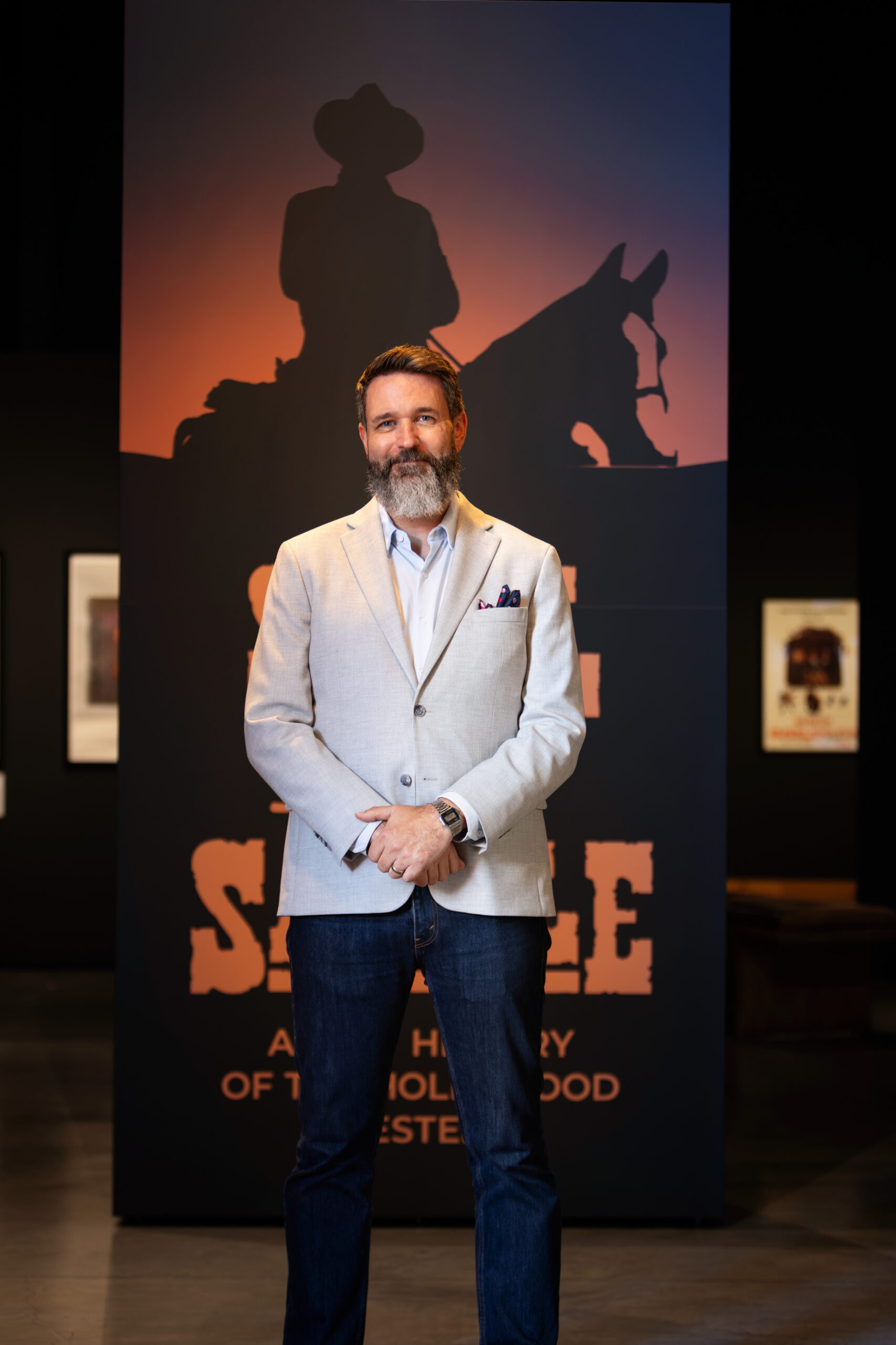
Andrew Patrick Nelson, chief curator at Scottsdale’s Western Spirit Museum, has centered his life’s work on the art, culture and entertainment of a region that continues to hold people in thrall. Since 2024 he has led the museum’s efforts to present the art and myth of a complicated past and present, held in tension with artifacts, first-person accounts and historical documentation.
Myth, in this case, isn’t a negative term.
“Myths are the real stories we tell ourselves to answer questions or solve problems we are struggling with,” he says. “Science or philosophy haven’t come up with satisfying answers to everything. Stories about much of the West are some of the most powerful of the 19th and 20th centuries and still resonate. We need to take them seriously.”
Nelson notes that Western art is not the same as Western history. Museums like this one tell the stories of the West through art.
“Even art produced in the moment it was happening — influenced by the sensibilities of the day or the unconscious biases of the artist — is a reflection of the moment,” he says. “Art privileges the subjectivity and perspective of the artist; that’s what makes history so interesting.
“I’m never trying to present the one true history of the American West. Here, we are telling the stories of the West through art. The facts are often not in dispute, but why it happened and why it matters — that is where the real energy of history lies. It’s less about one history than a set of competing historical arguments that change over time.
“When you’re in a museum like this one, art forces you to confront multiple and sometimes contrasting perspectives. That tells us a lot about the richness of human experience and why the Western story is so compelling — not because it’s one story for everybody, but because it’s many stories.”
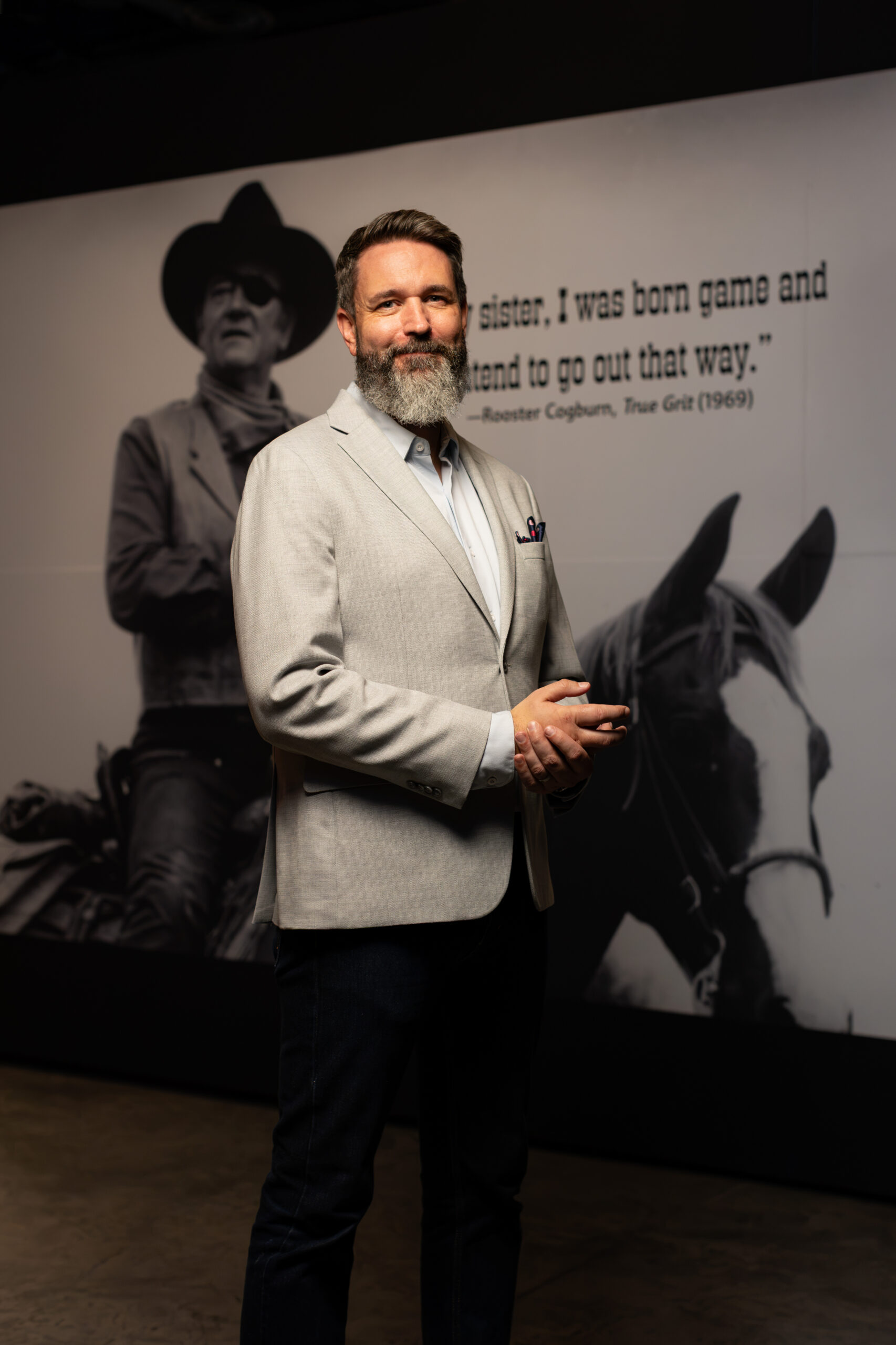
Those stories have been touchstones throughout Canadian-born Nelson’s life. An academic, author and podcast host, he is now leading Western Spirit into the future with its new Louis Sands IV Center, a $12 million, 12,000-square-foot expansion.
“There was very little ‘cowboy’ about my upbringing except that I was in the West and it was part of the culture,” Nelson says of his suburban childhood in Calgary, Alberta, home of the Calgary Stampede. “Calgary has cowboys, cattle, oil, a certain kind of independence — the things we associate with the West.”
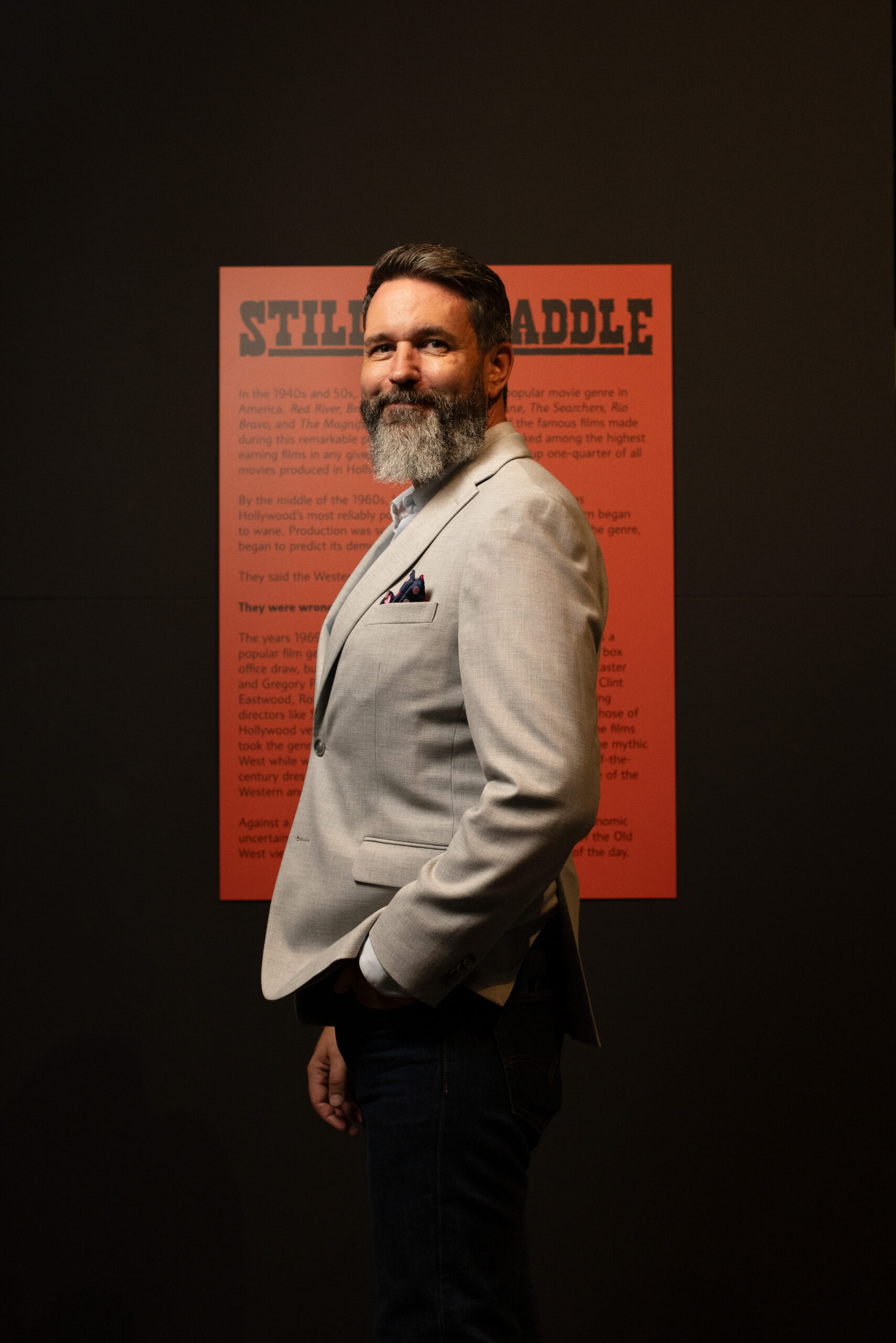
He began watching Westerns as a film student at the University of Toronto, then earned a Ph.D. in film from the University of Exeter under the tutelage of pioneering British scholar Steve Neale.
“Like so many sons of the West before me, I went east for education and, so enlightened, I returned to the West,” he says with a laugh. “There are many great British scholars who have written some of the most important critical work about Western movies. It was a wonderful place to learn about Westerns, genre cinema and Hollywood more generally.”
His first museum experience came at Exeter’s Bill Douglas Cinema Museum, where he volunteered cataloging, archiving and teaching exhibition design to fellow students. That paved the way for future television appearances on the History Channel, PBS, NPR, Fox Nation, INSP, CBC and National Geographic.
In the United States he taught film and photography at Montana State University (2013–2019), spent time as a visiting scholar at Stanford’s Bill Lane Center for the American West, and later chaired the film and media arts department at the University of Utah.
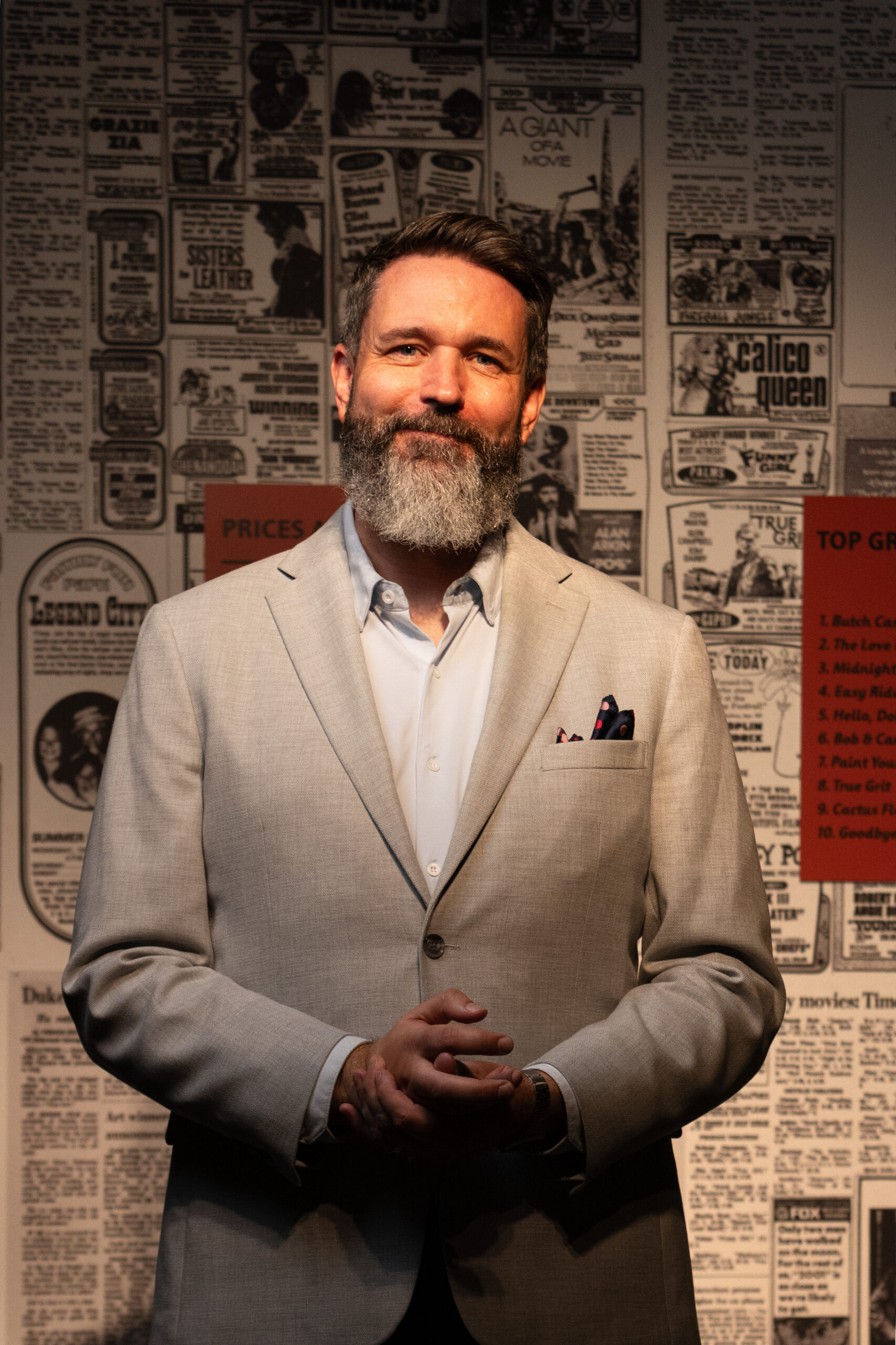
“Once my academic career began, I received invitations from museums to give talks and program films,” he says. “I was fortunate to be the film advisor on a major show jointly produced by the Denver Art Museum and the Montreal Museum of Fine Arts. That work ultimately led to guest curating, including the first iteration of ‘Still in the Saddle’ at the Briscoe Western Art Museum in San Antonio.”
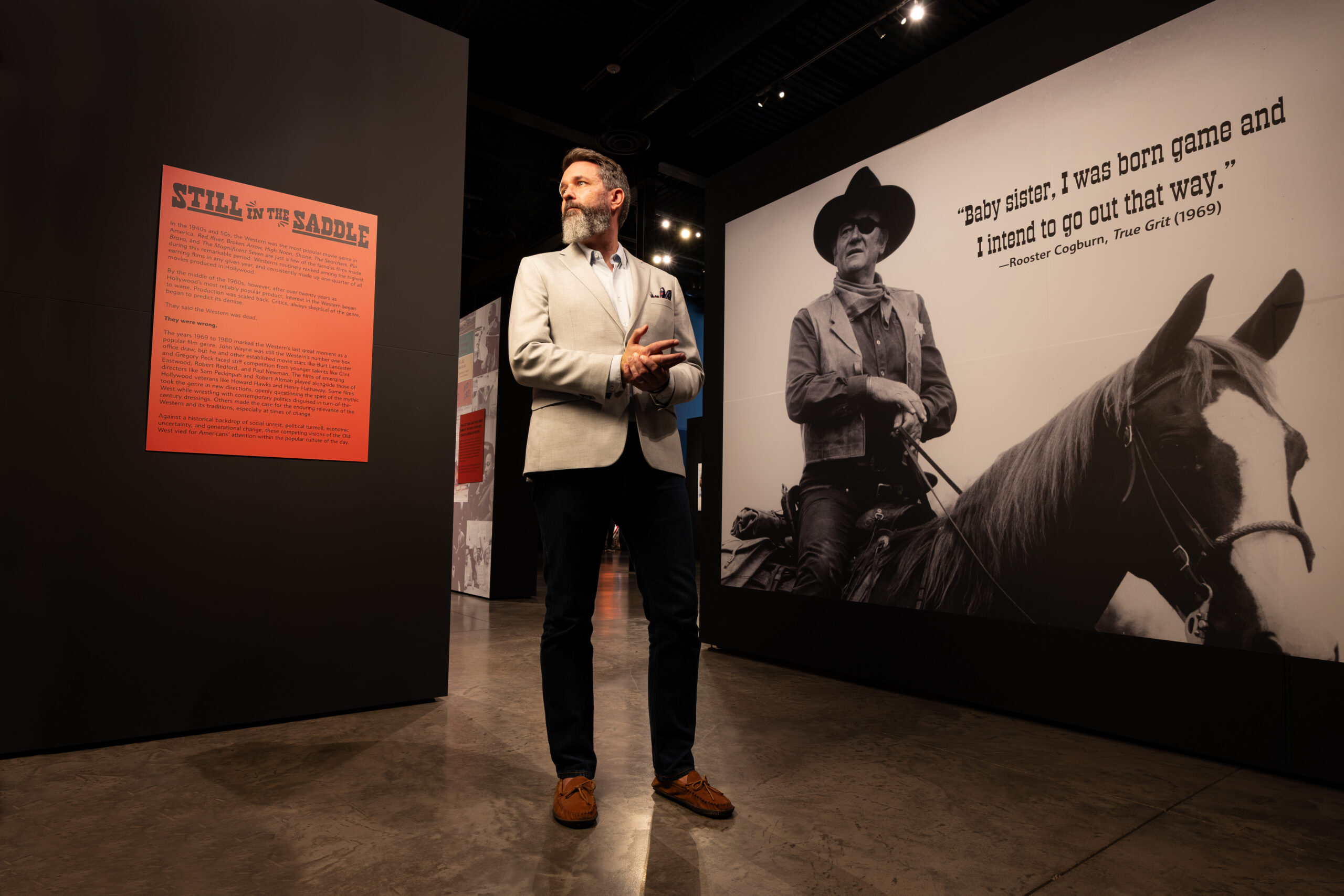
His books, “Still in the Saddle: The Hollywood Western, 1969-1980” and “Contemporary Westerns: Film and Television since 1990,” became the foundation for Western Spirit’s current exhibition, “Still in the Saddle: A New History of the Hollywood Western,” an expansion of the 2015 Briscoe show.
The exhibition was a natural fit for Western Spirit’s calendar once Nelson accepted the chief curator position.
“I certainly received inquiries [from museums] over the years, but never as appealing as the opportunity here at Scottsdale,” he recalls.
Part of the draw was the chance to curate his own exhibitions and help launch the Sands Center, which houses four galleries of Western American and American Indian art — painting, sculpture, jewelry and ceramics, many from the private collections of local museum donors.
“It’s not often a curator finds themselves with the chance to build out a new expansion,” Nelson says. “In two years we launched 14 exhibitions — done to very high standards — with a remarkable team. It has resonated with our visitors.”
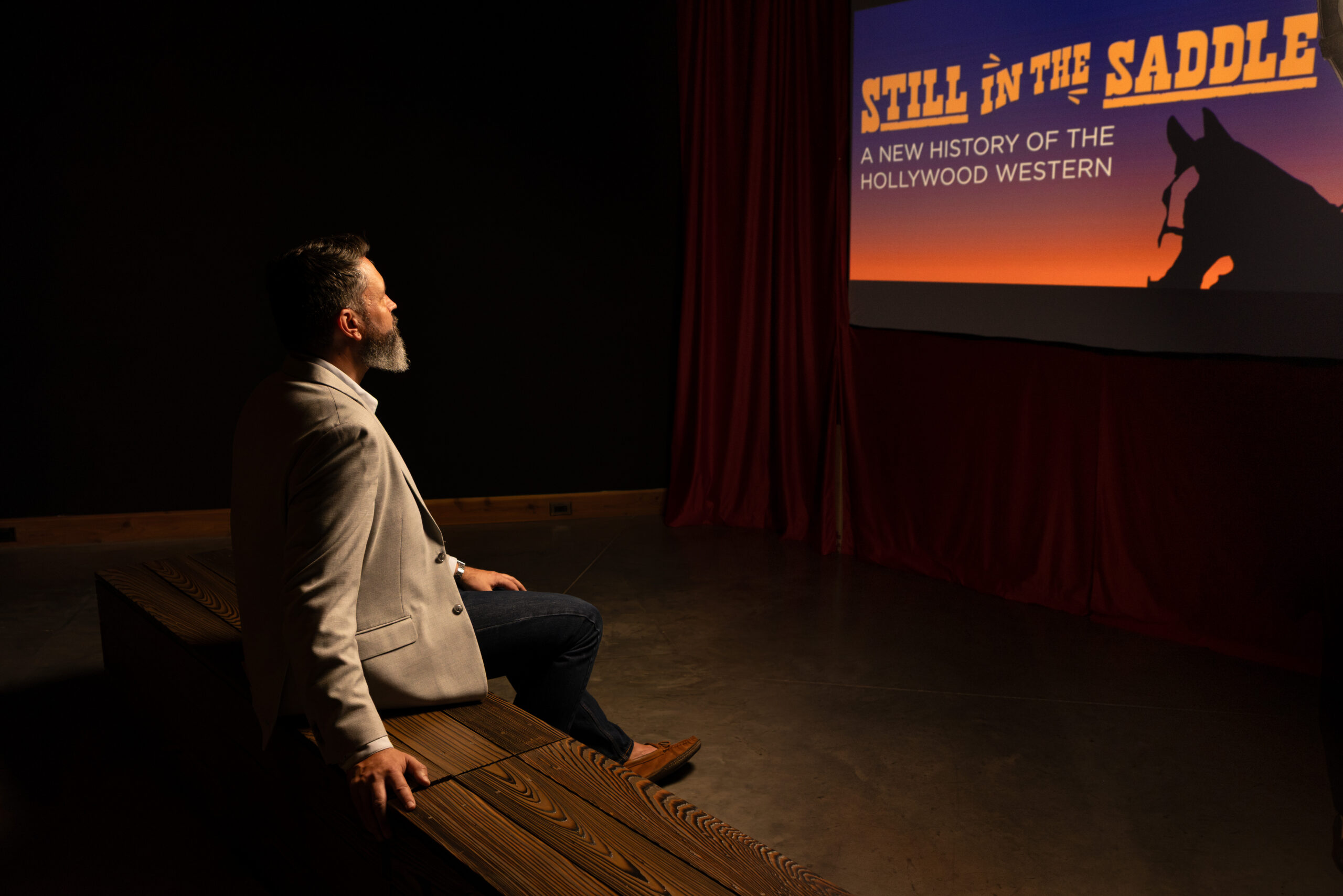
“Still in the Saddle” is nearing the end of its yearlong run, supported by lectures, Sunday film screenings and curator-led private tours. The book also inspired Nelson’s long-running podcast, “How the West Was ’Cast,” co-hosted with Los Angeles screenwriter and journalist Matthew Chernov. The pair met on Twitter (now X) and launched the show in February 2020.
“After hearing Andrew deliver several talks at the Autry Museum, I knew he was an incredible speaker with an approachable style,” Chernov says. “He’s a genuine intellectual authority on Western film history, while I’m more of a passionate lifelong fan. Despite being a serious academic, Andrew has a sly, silly side just beneath the surface. He’s one of the smartest and least pretentious people I know.”
Chernov adds: “It might sound like a cliché, but Andrew was born for the job of chief curator at Western Spirit. The man has absorbed so much information about the West — from film and fine art to historical records about indigenous cultures — that I can’t imagine anyone else bringing the same depth of knowledge and appreciation. Combine that with his avuncular personality, and it’s a combination any Western museum would be lucky to have.”
In the 6,000-square-foot exhibit, cowboys with thousand-yard stares look down from the walls while the sound of galloping hooves and gunfire drifts from screens. Among the artifacts is a duster once worn by John Wayne and a corduroy suit Robert Redford wore in “Butch Cassidy and the Sundance Kid.”
“It’s something you only experience on TV and suddenly it’s there — big as life in front of you,” Nelson says. “It’s incredibly meaningful to share the power of this art. It all comes down to the transcendent power of film.”
The exhibition presents Western movies of every style and actors of every background, a testament to the West’s versatility as a backdrop for drama, comedy or commentary. It strikes a balance that nudges visitors without scolding, while still engaging difficult topics.
“It’s important to meet people where they’re at,” Nelson says. “The tendency in the modern museum is to be more confrontational in trying to ‘correct’ people’s ideas. The worst thing you can do is welcome people by saying, ‘That thing you like? Here’s how it’s bad.’ That doesn’t mean those critiques aren’t valid, but that’s not how you educate people. We begin the hard conversations in a kind of middle ground.”
He emphasizes that the West has always been about contact, exchange, people coming together — and those who want to be left alone.
“The West can be all of those things, and in art, it is. We celebrate the diversity of those artistic traditions. We welcome people who decide to spend time with us and we can provide some context.”
In this way, Nelson is still teaching, just not in a conventional classroom. He and his family — a wife and teenage son — are enjoying life in Phoenix, and he is gratified by the community’s support as he plans future exhibitions.
“The West is still a place where people feel like they can come and achieve something or become the person they were meant to be,” he says. “That mythical idea is still very much alive here. That spirit endures.”