A length of 18-karat gold slides over a wrist, tightens and settles — no clasp, no catch, nothing holding it in place but the metal’s own memory of how to bend. It took a Vicenza workshop decades, several patents and at least four distinct engineering solutions to make jewelry move like that. This October, all four of those solutions will sit in the same room in Carefree.
Grace Renee Gallery’s Italian Weekend, running Oct. 22–24, brings together seven of Italy’s most recognized fine jewelry houses for three days under one roof. Four of them — FOPE, Mattia Cielo, Roberto Coin and Peruffo — already anchor the gallery’s standing jewelry program. The other three, Roberto Demeglio, Giovanni Ferraris and Chiarelli Milano, are new to Carefree, chosen deliberately by owner Shelly Spence and jewelry curator Natasha Lazarova to sit alongside them.
“We didn’t want seven houses that all say the same thing,” Spence says. “We wanted a weekend that shows people what Italian goldsmithing actually looks like right now — not one idea of luxury, but several, sitting next to each other so you can feel the difference.”
The gallery’s storefront sits in Carefree’s Spanish Village, in the Sonoran Desert foothills, home to both Spence’s contemporary art program and the fine jewelry line Lazarova has spent years building house by house. Italian Weekend is the first time she’s assembled this many at once.
The concentration itself is worth pausing on. Nearly two-thirds of Europe’s gold jewelry is made in Italy, and roughly a third of that comes out of Vicenza alone — a city so associated with the standard that it’s long been known specifically for 18-karat gold, the karatage behind FOPE’s Flex’it and most of the Vicenza houses in this show. Valenza, in Piedmont on the opposite side of the country, runs a different specialty: more than 1,500 goldsmithing firms there handle the bulk of the fine gemstones Italy imports, which is exactly the terrain Ferraris and Chiarelli Milano work from. Underneath both towns is the same apprenticeship model — skill handed from bench to bench, often inside one family for generations — which is why four of the seven houses in this show can each trace their name back to a father, grandfather or founding partner who was already working gold before the current label went up.
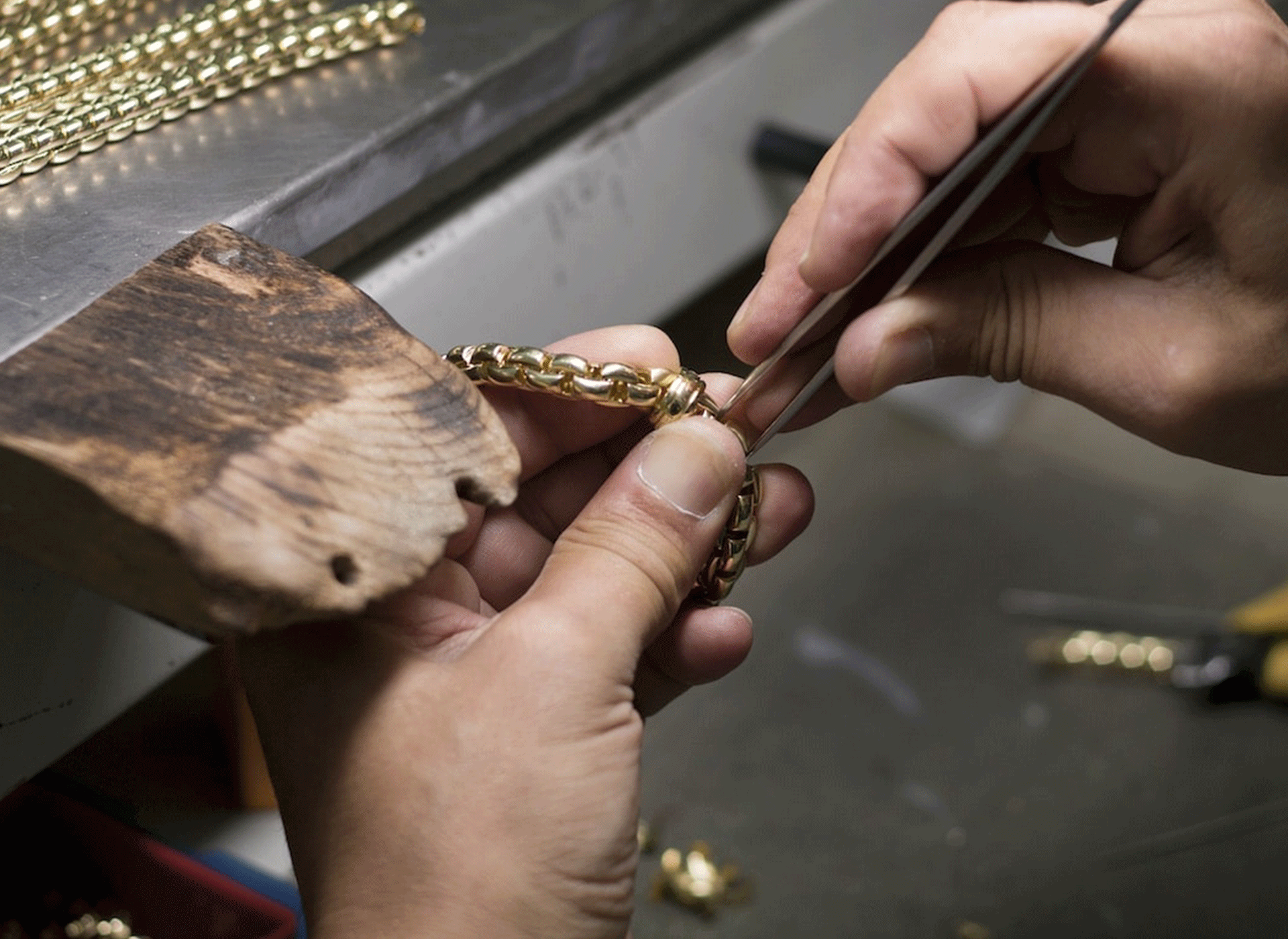
That difference starts with engineering — and, in FOPE’s case, with nearly a century of practice at it. Founded in Vicenza in 1929 and still run by three generations of the Cazzola family, the house had already spent decades solving mechanical problems in gold before it patented Flex’it in 2007, the technology that lets 18-karat mesh stretch and release without a clasp. The 1985 Novecento chain, a woven mesh design, was an earlier attempt at the same instinct. Mattia Cielo, founded in 2006 by a jeweler born into one of Italy’s own prominent jewelry families but trained himself in commerce rather than at the bench, borrows from aerospace engineering, building coiling memory-alloy cores that let a piece move independently of the wearer’s own motion.
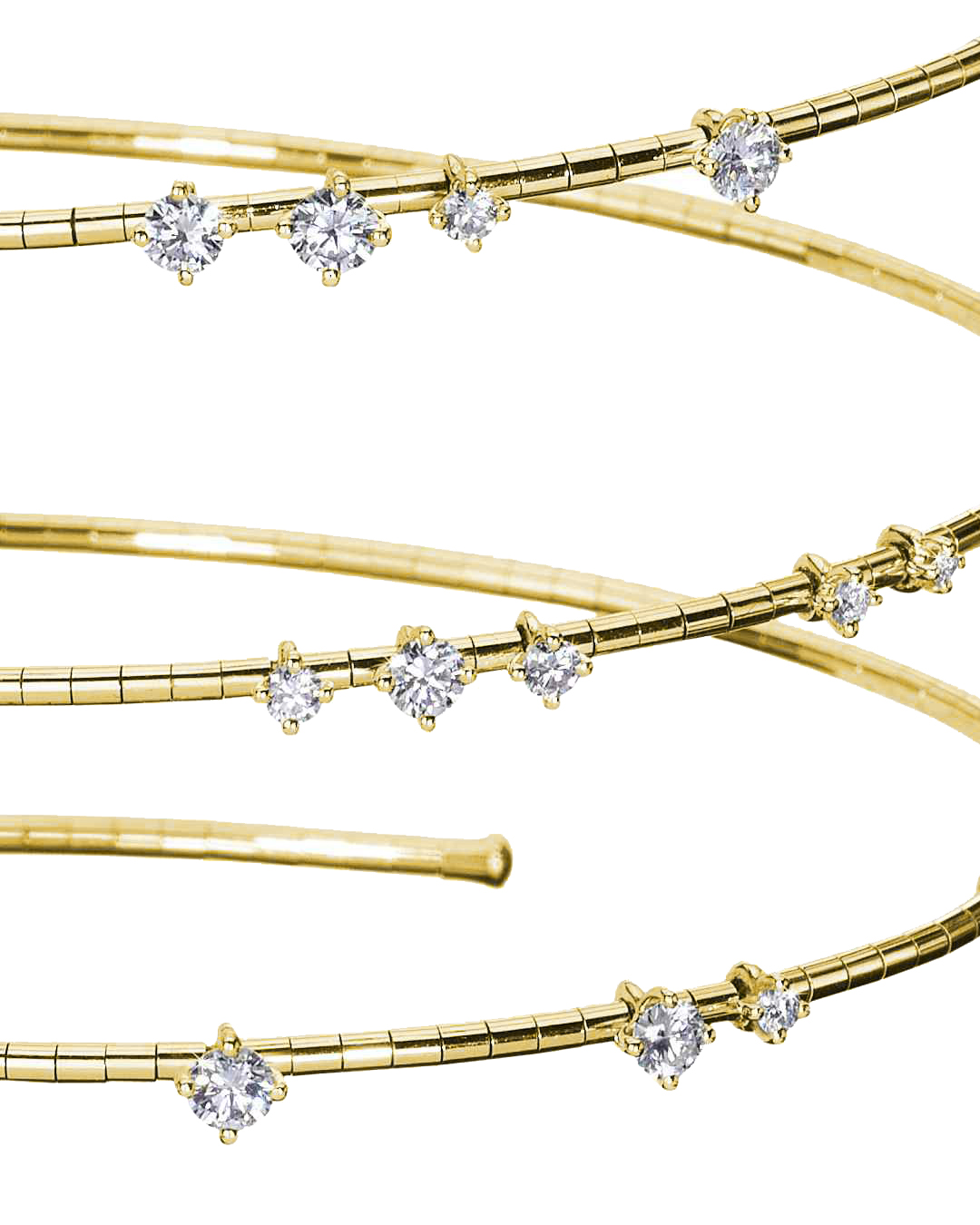
Roberto Demeglio, working out of Torino on a family goldsmithing lineage that dates to 1922, solves the same problem differently: a patented stretch-coil system combining gold, ceramic and precision metal that lets bracelets twist and slide onto the wrist without losing their shape. And Peruffo — the current identity of Fratelli Bovo, a Vicenza house founded in 1977 and now led by second-generation CEO Enrico Peruffo, a cousin of the founding Bovo brothers — skips gemstones entirely, building sculptural gold forms out of articulated, moving elements instead.
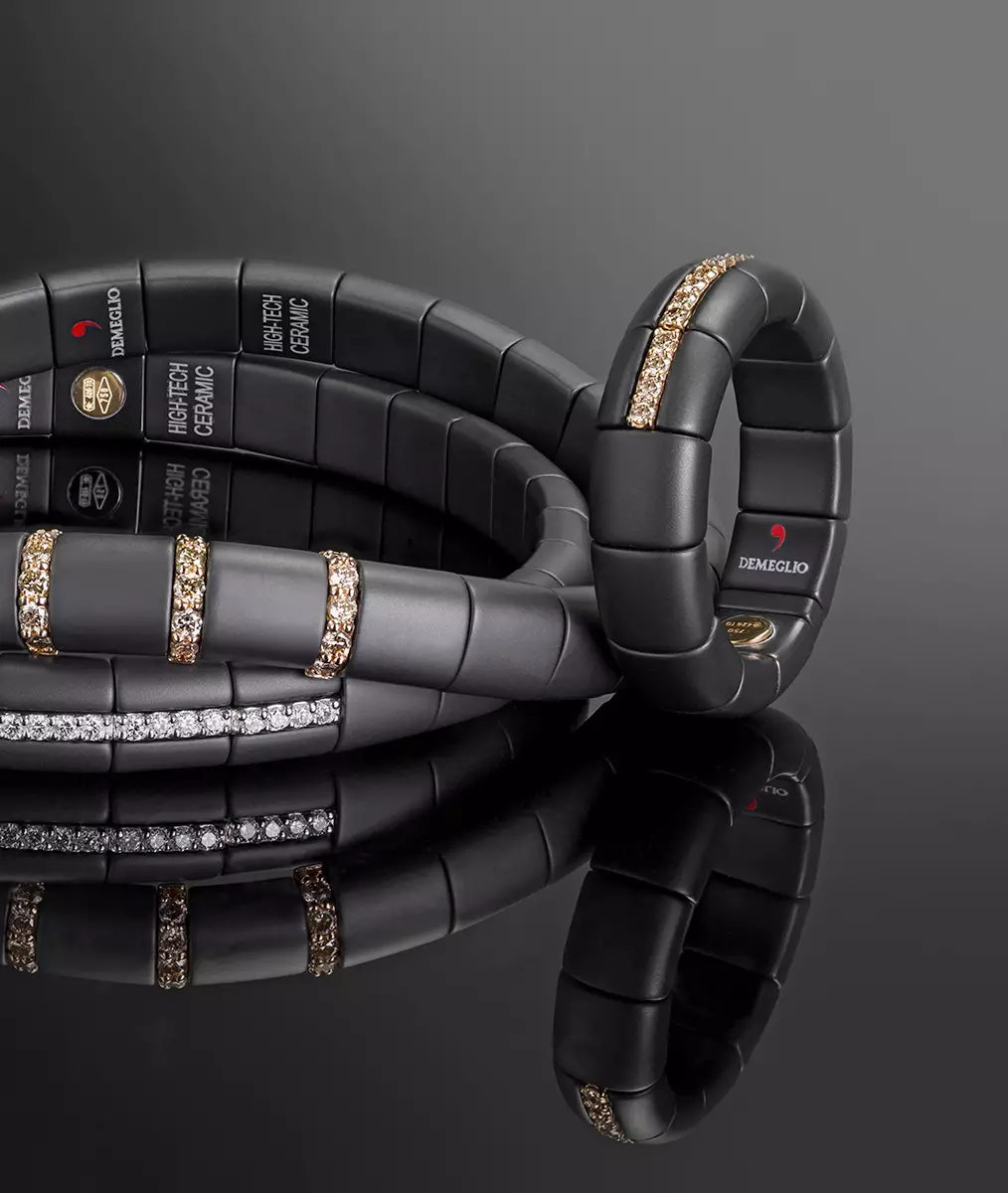
“Four houses, four completely different mechanisms, and none of them borrowed from each other,” Lazarova says. “That’s what tells you it’s a real engineering problem worth solving, not a gimmick one brand happened to land on.”
Roberto Coin sits at something of a hinge point. Also rooted in Vicenza’s goldsmithing tradition — Coin founded his company there in 1977, after an earlier career as a hotelier, and launched his eponymous label in 1996 — his signature isn’t mechanical at all. Every piece conceals a ruby somewhere in its structure, visible only to the person wearing it. The house produces more than 600 new designs a year and sells through over 1,000 retailers worldwide, yet the ruby stays a private detail rather than a marketed one.
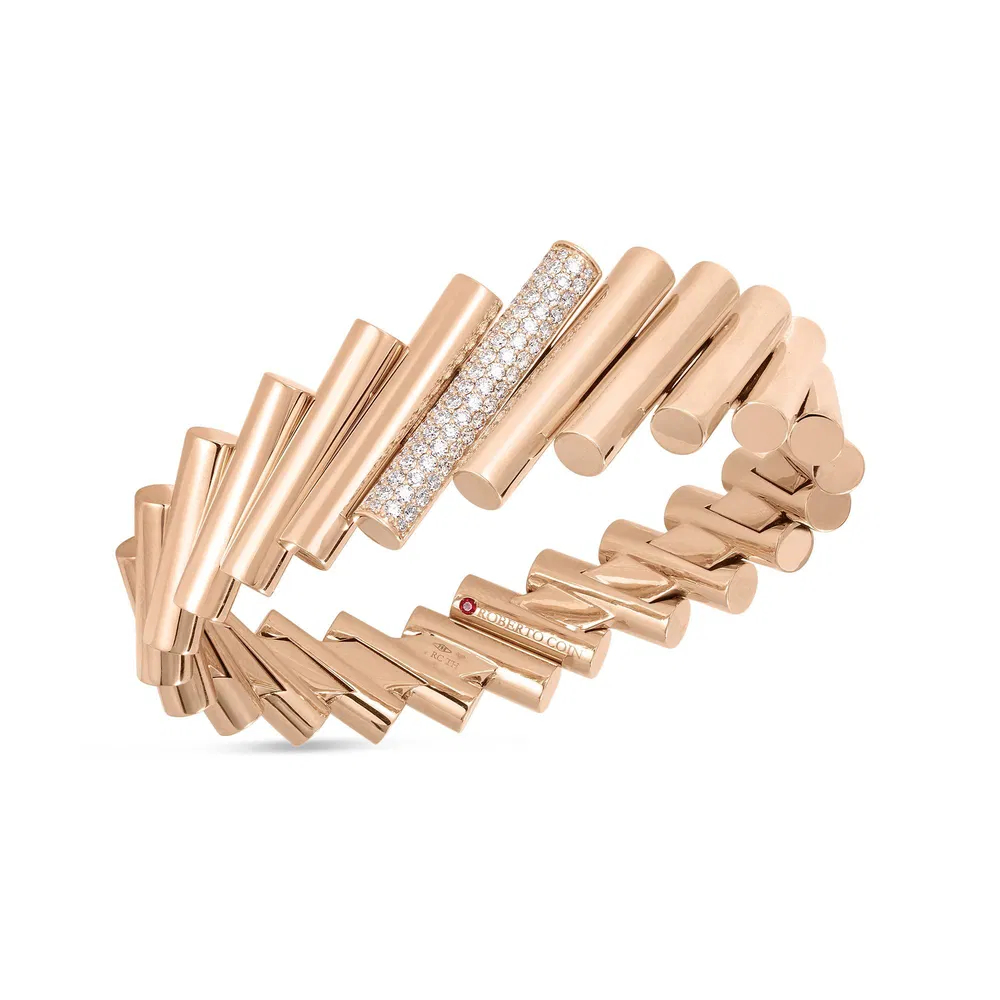
“It’s the opposite instinct from Flex’it or a coil system,” Lazarova says. “Nobody needs to see it work. You just need to know it’s there.”
Where the Vicenza houses build identity around mechanism, Giovanni Ferraris and Chiarelli Milano build theirs around color and story. Ferraris has worked from the goldsmithing district of Valenza since 1985, alongside his wife and co-designer, Katia Olivucci, favoring large-format colored gemstones set into bold dome and cocktail rings meant to be seen across a room. His recent Riflessi collection clusters marquise, teardrop, cabochon and round-cut stones — sapphires, tourmalines, a full range of color — into pieces built less around a single showpiece gem than around the interplay of several at once.
“Ferraris is doing something almost architectural with color,” Lazarova says. “Most designers pick one great stone and build around it. He’s arranging several the way you’d arrange notes in a chord.”
Chiarelli Milano is the newest name in the lineup by decades. Jessica Nasr founded the house in 2020 after years spent living abroad, returning to Italy and to her family’s roots to build a brand where the jewelry itself carries her own story — journeys, migration, the layered identity of someone who left home and came back changed. Every piece is still handcrafted by artisans in Valenza.
“Jessica isn’t asking a piece to be a technical marvel,” Spence says. “She’s asking it to mean something specific to the person wearing it, the same way a great painting means something specific to the person who bought it. That’s exactly the kind of thinking we look for on the art side of this gallery, and it’s why she belongs on the jewelry side too.”
That refusal to separate the two conversations — serious art gallery, serious jewelry destination, neither one subordinate to the other — is what Spence built Grace Renee Gallery around, and it’s the same instinct driving this particular weekend. Seven houses, four Italian cities, one shared goldsmithing tradition pulled in at least two directions at once: toward mechanism and toward meaning.
By the time a visitor leaves the gallery Oct. 24, they’ll have handled gold that flexes, gold that coils, gold that hides a ruby and gold that simply refuses to sit still. There was never only one right way to make a piece of jewelry move — or to make someone want to wear it.
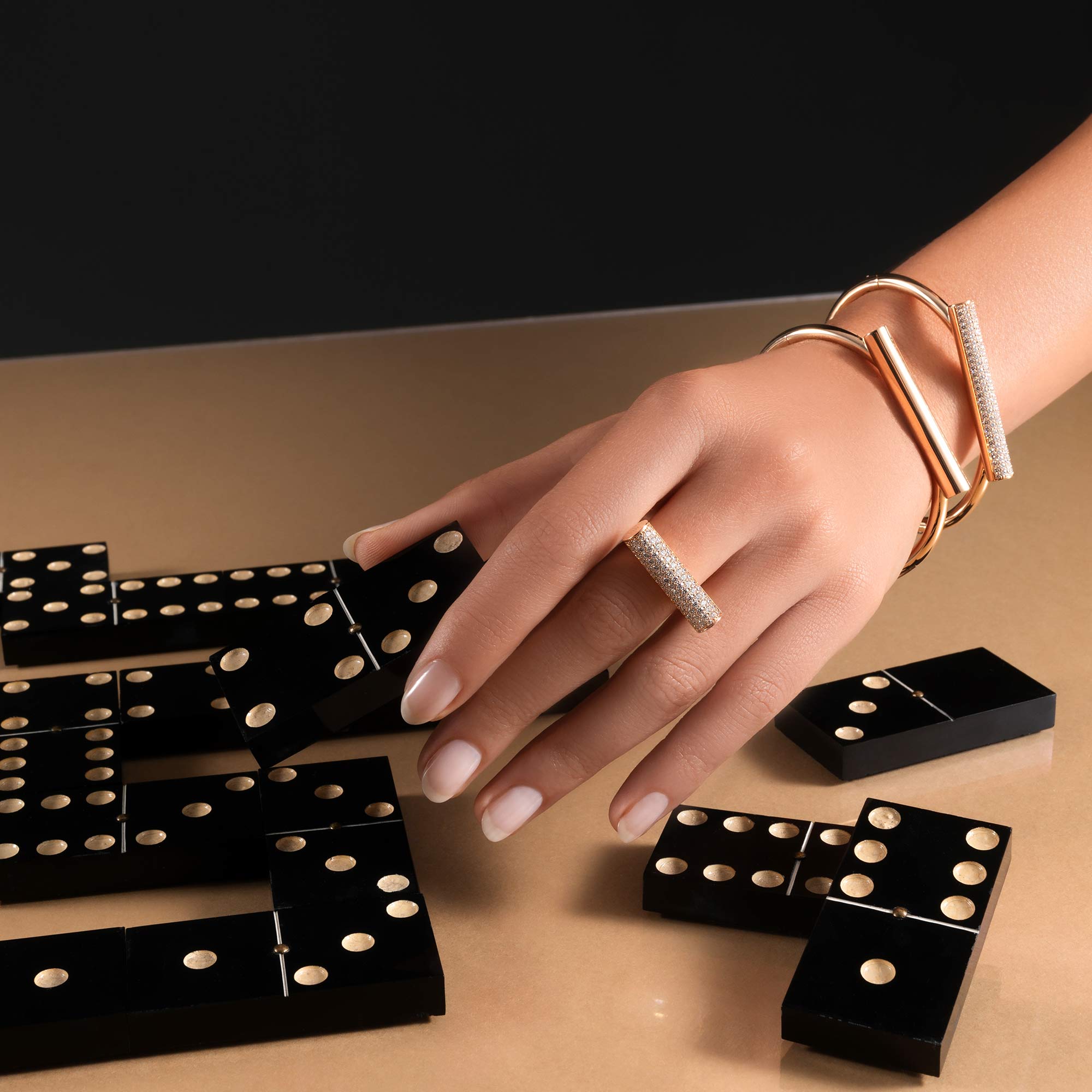
Images courtesy of the designers and Grace Renee Gallery