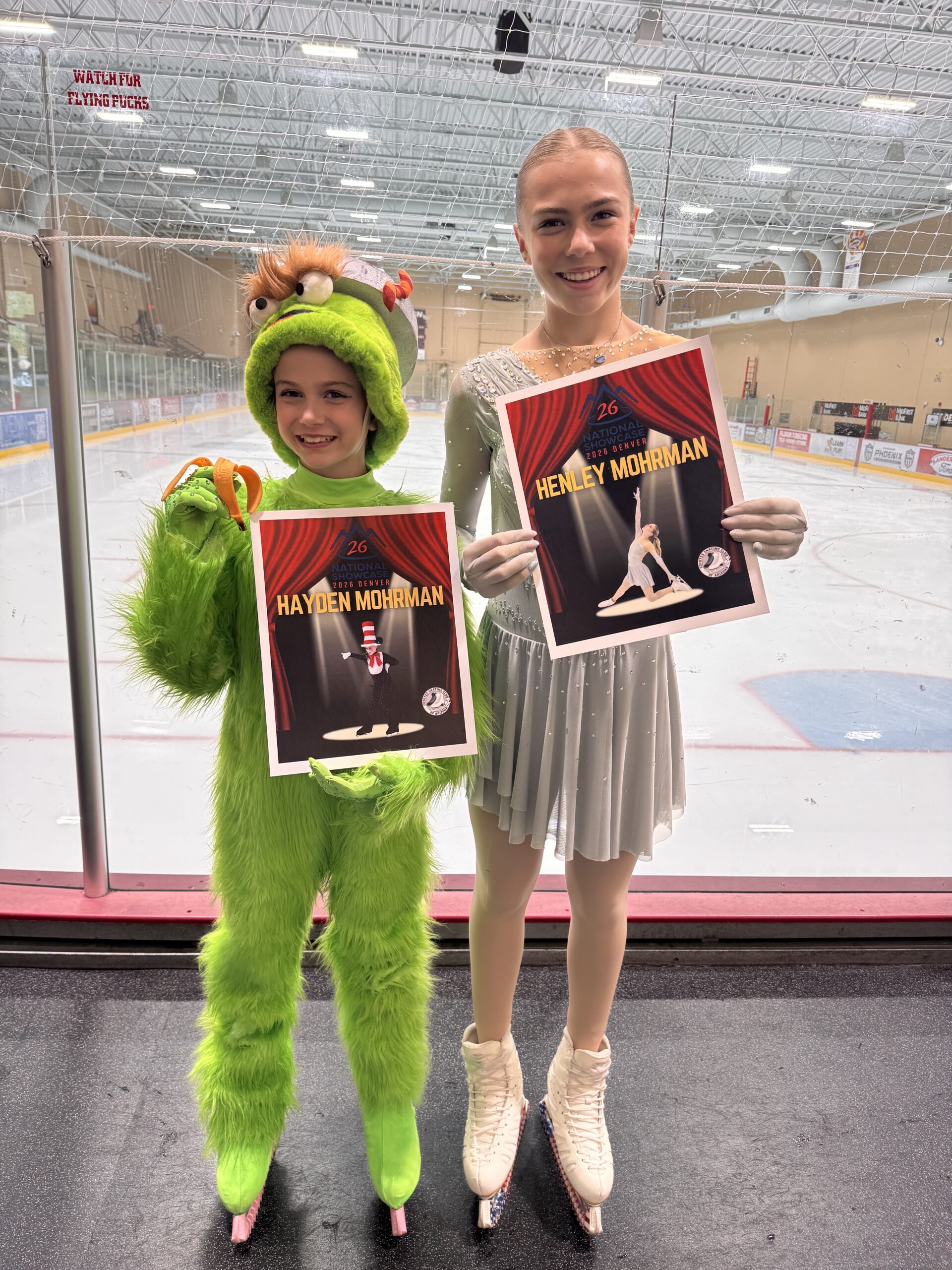
A fuzzy green creature glides across the ice, leaping, spinning, amping up the grumpy expressions as the crowd smiles, laughs and cheers on every trick and turn.
But this Oscar the Grouch is no puppet. It’s 11-year-old Hayden Mohrman, embodying the lovable “Sesame Street” curmudgeon and skating her way to a bronze medal for her comedic performance at the National Showcase in Colorado this August, along with strong finishes in several other events.
“I like to make people laugh,” Hayden says. “I saw a lot of people smiling and laughing so I thought I was doing good. Whenever I make people laugh, I feel better about the program.”
Hayden says it was an honor to be recognized for her performance and character as well as her technical skating. One of three North Scottsdale sisters pursuing their rink dreams, she represents Coyotes Skating Club of Arizona. Colorado isn’t the only place she has earned high honors. In July, Hayden skated to fourth place among 24 nationally ranked skaters in the Preliminary Excel Plus division at the U.S. Figure Skating Excel National Final, the only medalist from her club. That performance placed her fourth in the country among approximately 400 skaters at her level.
In conversation, Hayden is effusive and cheerful, praising her 14-year-old big sister, Henley, who was the impetus for Hayden’s entry into the sport — and who has put up with two loud younger siblings following her onto the ice.
“She was at the rink every day for as long as I can remember; since I was five,” Hayden says. “When I started private lessons, I didn’t like it at first, but when I got close to landing the single Axel, I started caring.”
Six days a week, Hayden, Henley and their 8-year-old sister, Charley, train at Ice Den Scottsdale with a coaching team led by Karen Gesell that includes Max Aaron, Julie Patterson and Danielle Leong.
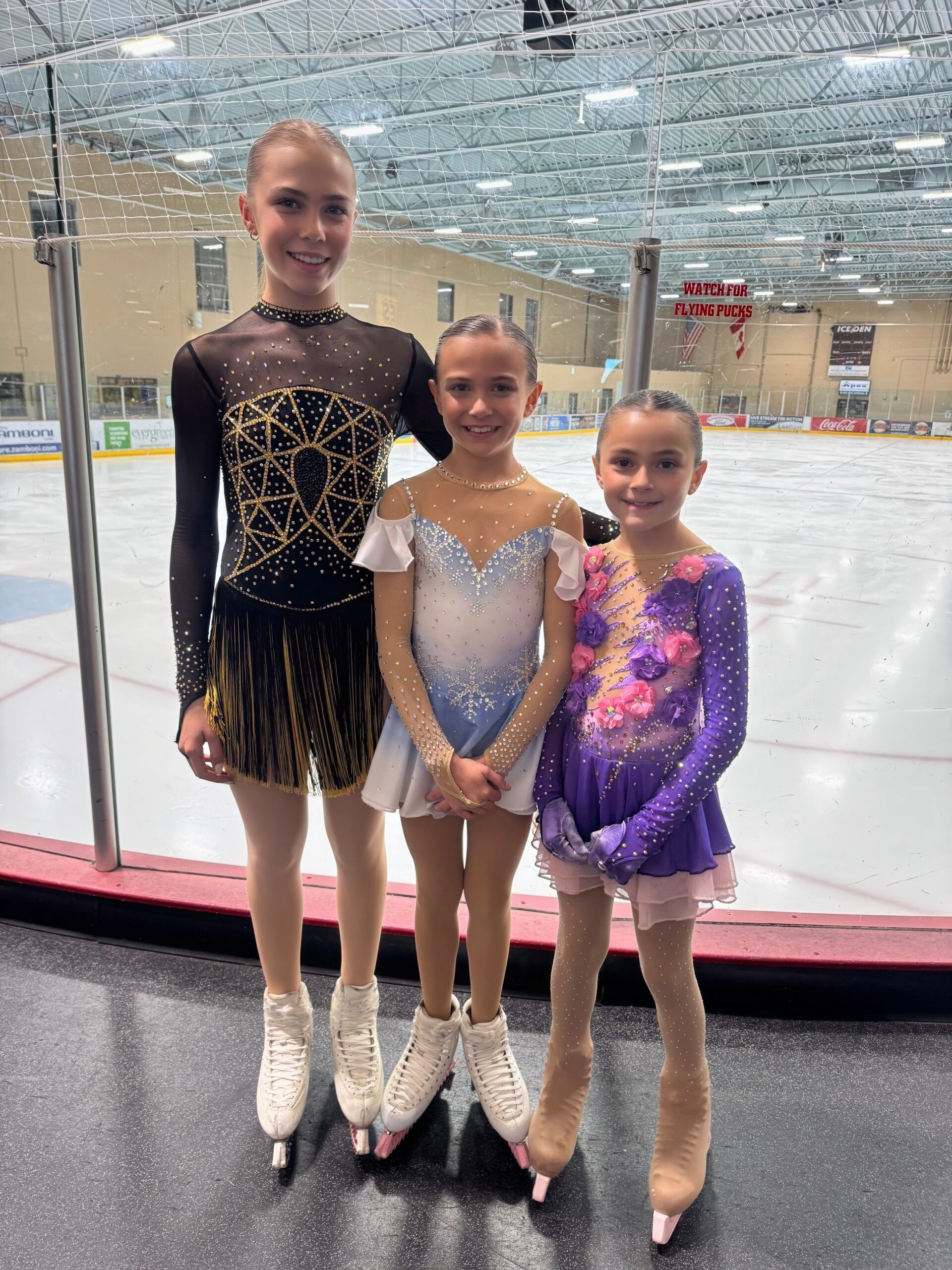
Hayden also competes in a team discipline as a member of the Ice Denettes Juvenile synchronized skating team, traveling the country as it aims to qualify for nationals. The sport originated in Michigan in 1956 and will gain a brighter spotlight when a new format, Synchro9, debuts at the 2028 Winter Youth Olympic Games in Italy before making its Winter Olympics debut in 2030.
“It’s something I do on the side on weekends,” Hayden explains. “They practice every Monday. I feel like synchro is really going to help with my skating skills, which are getting better. All the steps are on a count of eight. That keeps the whole team on the same foot.”
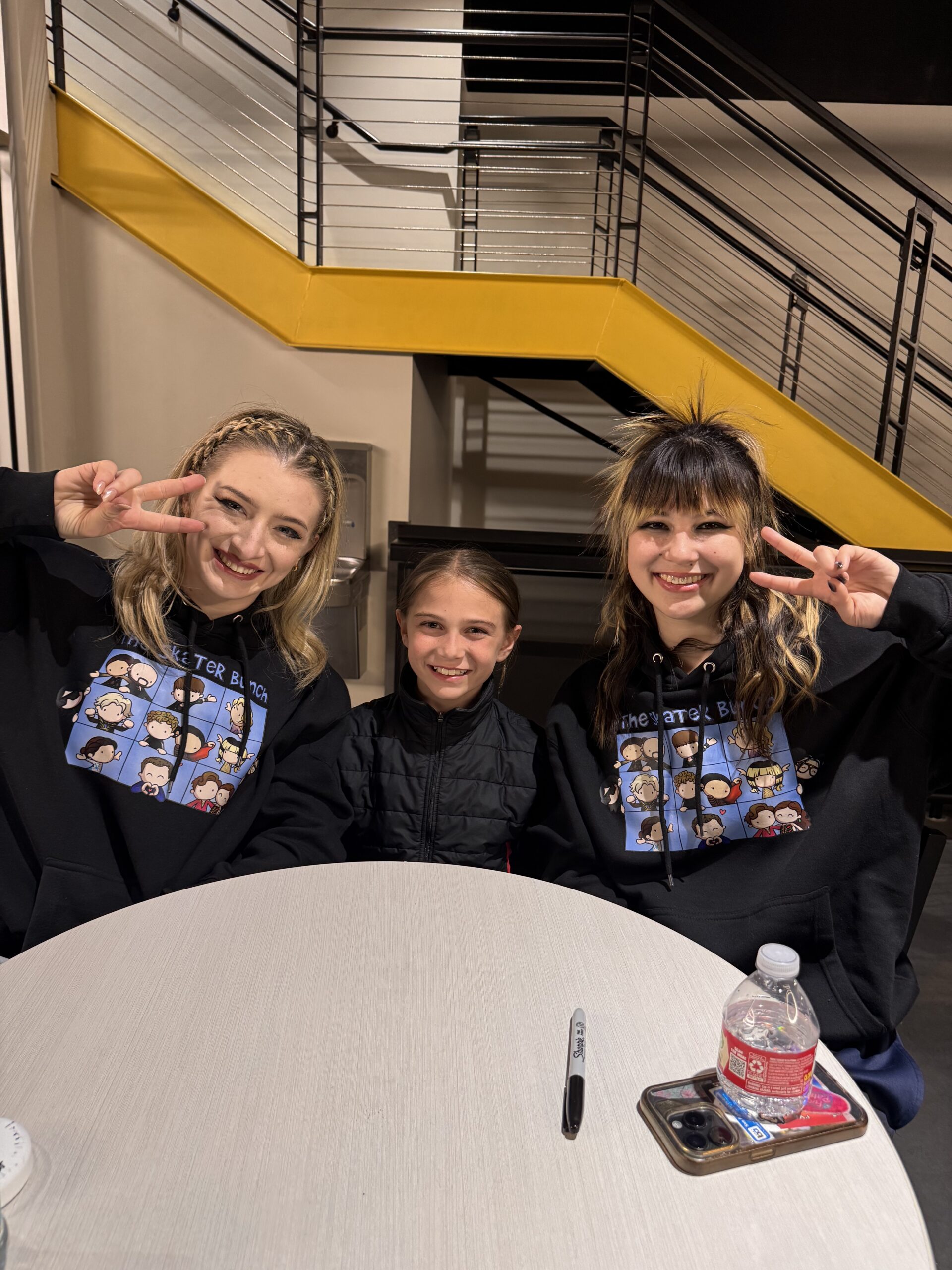
Their mom, Heather, is there through the early-morning wake-ups, rides to school, homework and, of course, training. The rink has become the family’s second home.
“I’m at the rink with them all the time,” Heather says. “I’m their biggest fan. As a mom, it requires a lot of time, scheduling and sacrifice to support your children’s dreams. Watching them skate and perform, I’m just as nervous as they are, probably worse! I’m proud of each one of them.”
Henley, described by Hayden as “the ballerina of the family,” began skating at age 6 when she was hunting for an after-school activity.
“When I got on the ice for the first time, I really enjoyed it,” she recalls. “I decided I wanted to keep going and do some competitions.”
The high school freshman, who enjoys reading and time with friends when she isn’t training, describes herself as a technical skater, concentrating on the precise skills needed to compete at the demanding Intermediate level. Advancing requires integrating challenging skills into every performance, with longer program times, including strong, consistent double jumps.
As the oldest, Henley is always the trailblazer, training longer and stepping — or skating — into every new stage as the first in her family to do so. It’s a lot for a young woman to shoulder. She’s more soft-spoken than Hayden and chooses her words carefully, but her skating speaks volumes.
“I wouldn’t say I feel pressure; I want to set a good example for my sisters,” she says.
Hayden adds that Henley is relentlessly positive and tells her sisters each night to make the next day their best day.
Henley’s proudest moment was qualifying to compete in two events at the Colorado Showcase and earning a sixth-place finish in the emotional program.
“Keep trying, don’t give up, work hard and follow your dreams,” she tells aspiring skaters.
“Henley is a more cautious skater but she works so hard,” Heather says. “She’s the classic first child; she’s hard-working and she’s a rule follower. I am so proud of her work ethic.”
Henley spends three hours on the ice on practice days, working on triple jumps and double Axels — a goal Hayden shares as they pursue the challenge of two-and-a-half rotations launched from the forward outside edge of the skate. Only 3% of skaters can land the jump required to reach U.S. Figure Skating’s senior level of competition.
“You have to get a lot of height, momentum and keep your arms in. Let’s just say… my arms like to be out,” Hayden says of the double Axel.
She lands her other doubles cleanly, though she says she’s currently working on maintaining proper arm position for her double Lutzes.
Chasing figure skating dreams demands extreme dedication, on and off the ice. When the skates are off, the Mohrman girls hone their skills and flexibility with stretching, plyometrics (including box jumps in pursuit of those double Axels), strength training, tumbling and dance. Charley’s regimen has helped her reach the Aspire 3 level, and she’s already landing single Axels and double Salchows.
“I like being upside down and flipping my body,” Hayden says with a beaming smile.
“She is committed,” Heather says of her middle child. “If she wants to land a jump, she’s going to work until she lands it. She will be the one doing as many sessions as possible and will try as many times (sometimes without permission) until she lands it.”
The talented Mohrman girls make the smooth turns and graceful leaps look effortless, but they’ve faced challenges beyond pursuing the next skill. Hayden has struggled with dyslexia; math is among her favorite subjects, and she enjoys using it to count rotations. Henley faced what could have been a career-ending injury at age 10 when she broke her tibia.
“It was really hard coming back from my broken leg,” Henley recalls. “I really wanted to come back to the sport because I enjoy it and wanted to get back to what I used to do, improve and move up from where I was.”
The recovery kept her off the ice for eight months.
“It took a long time to even get the courage to come back and skate,” Heather says. “It took a lot of work to jump again and relearn a lot of things. I always teach the girls that some days will be good and some will be bad. I tell them to trust their training and what their bodies can do.
“Hayden has overcome so many obstacles — her dyslexia and physical challenges that required occupational therapy. Seeing her blossom with her skating — she is so determined out there.
“Charley follows along and is already surpassing some goals.”
“Whether or not they continue as adults, they’ve built a great work ethic, they have excellent discipline,” Heather says. “They’re up at 6 a.m. for practice and they know what they have to do. That will carry on with them into whatever they choose to do in life.”
For now, the Mohrman sisters keep showing up morning after morning with skates in hand, chasing the next rotation, each with personal goals but united in cheering one another on. In the midst of every early alarm, long day and bruised limb, what remains is the simple joy that first drew them onto the ice: the chance to make an arena full of strangers smile or even laugh aloud. Whether they stand on the podium or not, the three North Scottsdale sisters have already proven what their parents have impressed upon them: the real prize is the grit, the grace under pressure and the bond forged in chilly rinks in the soft light of dawn.
Photography Courtesy of Heather Mohrman