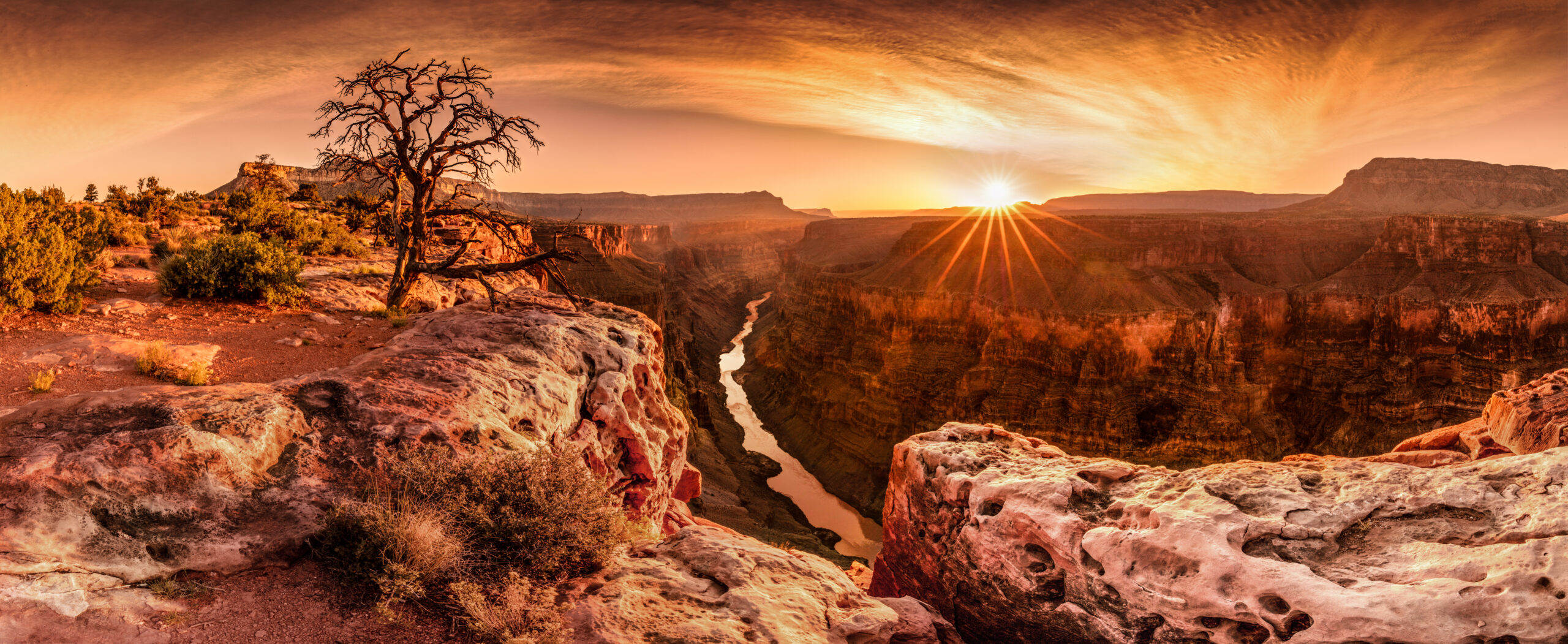
Every evening, the same performance plays out along the rim: the light drains out of the canyon in long amber sheets, the crowds thin, and a handful of visitors linger past the point where the guidebooks stop talking. They drift toward a small stone marker behind a parking lot, or stand at an overlook where a honeymoon once ended without an ending, or picture a stubborn gray burro somewhere on a snowbound ridge, holding out against men who might not let him see spring.
Since its dedication as a national park in 1919, the Grand Canyon has drawn visitors for its vistas — but it has just as steadily collected a second kind of record, one kept not by geologists but by rangers, hotel staff and the travelers who linger after the tour buses pull away. These are the canyon’s mysteries: three stories, each holding at least a thread of truth, each proof that Arizona’s crown jewel guards as much as it reveals.
The Harvey Girl Who Never Was
Walk past El Tovar Hotel’s parking area today and you’ll still find it: a weathered stone marker reading “Pirl A. Ward, 1934,” tucked into a small grove of trees a few dozen steps from the hotel’s front doors. Opened in 1905 as one of the original Fred Harvey Company hotels along the Santa Fe Railway, El Tovar has welcomed guests ranging from Theodore Roosevelt to Albert Einstein — and, if the stories are true, has kept a few of them long after checkout. The marker has spawned one of the South Rim’s most persistent ghost stories: that of a doomed Harvey Girl, one of the crisp-uniformed hostesses who staffed the company’s hotels, said to have died an untimely death and never left. Visitors and hotel staff alike report a black-shrouded figure gliding past the marker on moonlit nights before vanishing behind the Hopi House.
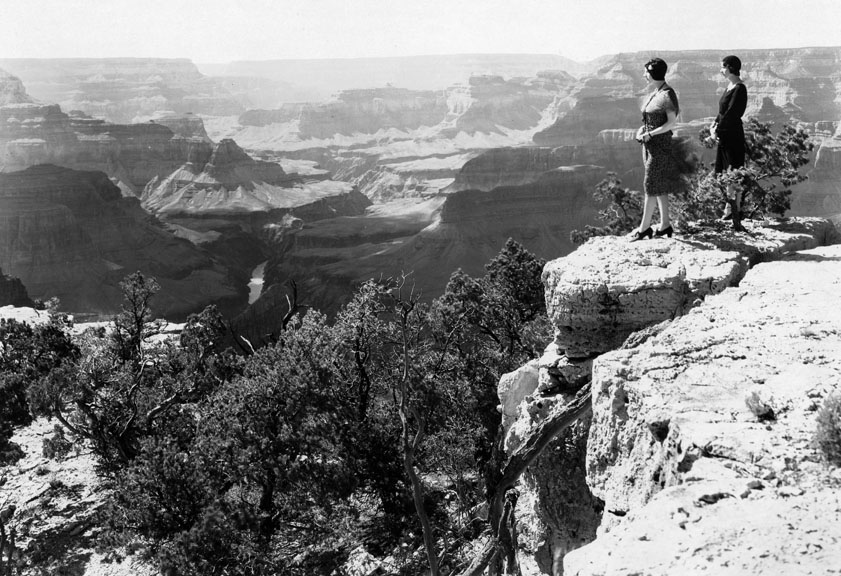
The truth is stranger for being more ordinary. The marker is a cenotaph — a monument with no body beneath it — and accounts of who Ward actually was don’t agree with each other, let alone with the ghost story. Some describe him as a cowboy passing through; others as a laborer who spent years working construction around the hotel before his death in 1934. He rests hundreds of miles away in Artesia, California, regardless of which story is true.
Ward isn’t El Tovar’s only resident specter. A second legend has attached itself to the hotel’s founder: each Christmas, guests report an older gentleman in old-fashioned dress inviting them to the season’s festivities, seemingly unaware that Fred Harvey has been dead since 1901. Between Ward’s marker and Harvey’s holiday visitations, the hotel has spent more than a century proving that a good story outlives the facts that inspired it — and outdraws them, too.
When Winter Claims Its Own
The canyon’s mysteries aren’t limited to human tragedy. For roughly three decades, from about 1892 until 1922, a gray burro named Brighty wandered the inner canyon and the North Rim, named for Bright Angel Creek, where he spent his summers. He carried water for tourists, let children ride on his back, and by most accounts tolerated nearly anyone who arrived with a pancake in hand. He is even said to have crossed paths with President Theodore Roosevelt during one of Roosevelt’s own canyon visits — the kind of encounter that made Brighty as much a local celebrity as a working animal.
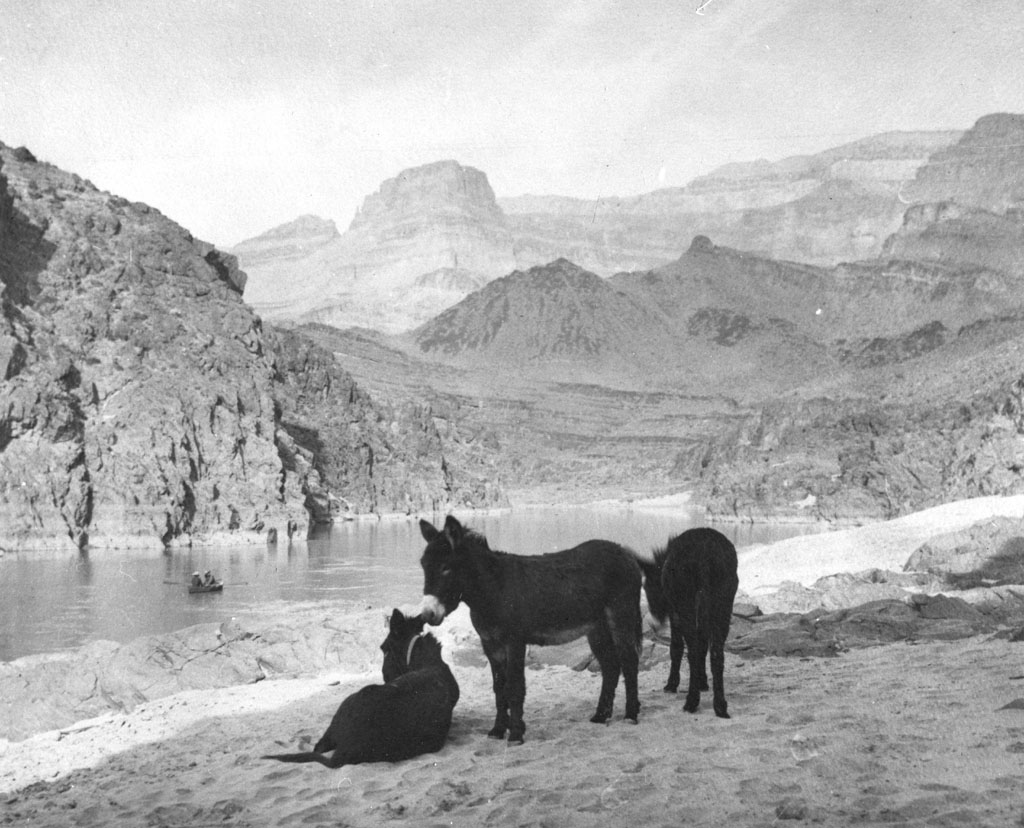
Brighty’s fame outlasted him by decades. A 1922 Sunset magazine article by former North Rim camp manager Thomas McKee — titled “Brighty, Free Citizen” — introduced him to a wider audience, and three decades later, author Marguerite Henry turned his story into a children’s novel. Henry didn’t take McKee’s word for it: she traveled from her home in Illinois to interview park rangers and wranglers and rode a mule into the canyon herself before publishing Brighty of the Grand Canyon in 1953, adapted for the screen in 1967.
According to canyon legend, that same winter of 1922 was also his last. A man fleeing into the canyon is said to have encountered Brighty and, lonely in the season’s quiet, been followed by him up toward the North Rim. When a blizzard trapped the fugitive and a second stranded traveler together in a small cabin for months on end, the story goes, hunger eventually settled the standoff between them — and Brighty didn’t survive the spring.
Nor, nearly, did his memorial. A bronze statue of Brighty had stood inside the Grand Canyon Lodge on the North Rim since 1966, his muzzle worn bright by generations of visitors rubbing it for luck. The statue’s popularity later became entangled in a real fight over the canyon’s feral burro population, one that eventually led wildlife officials to airlift hundreds of the animals out rather than let them multiply unchecked. Then, in July 2025, the lightning-sparked Dragon Bravo Fire tore through the North Rim, destroying the historic lodge along with dozens of other structures. Brighty survived — barely, with broken legs and a hole where his pedestal had been — and was moved to the South Rim, a century-old legend now standing somewhere he never stood in life.
The Honeymooners Who Vanished
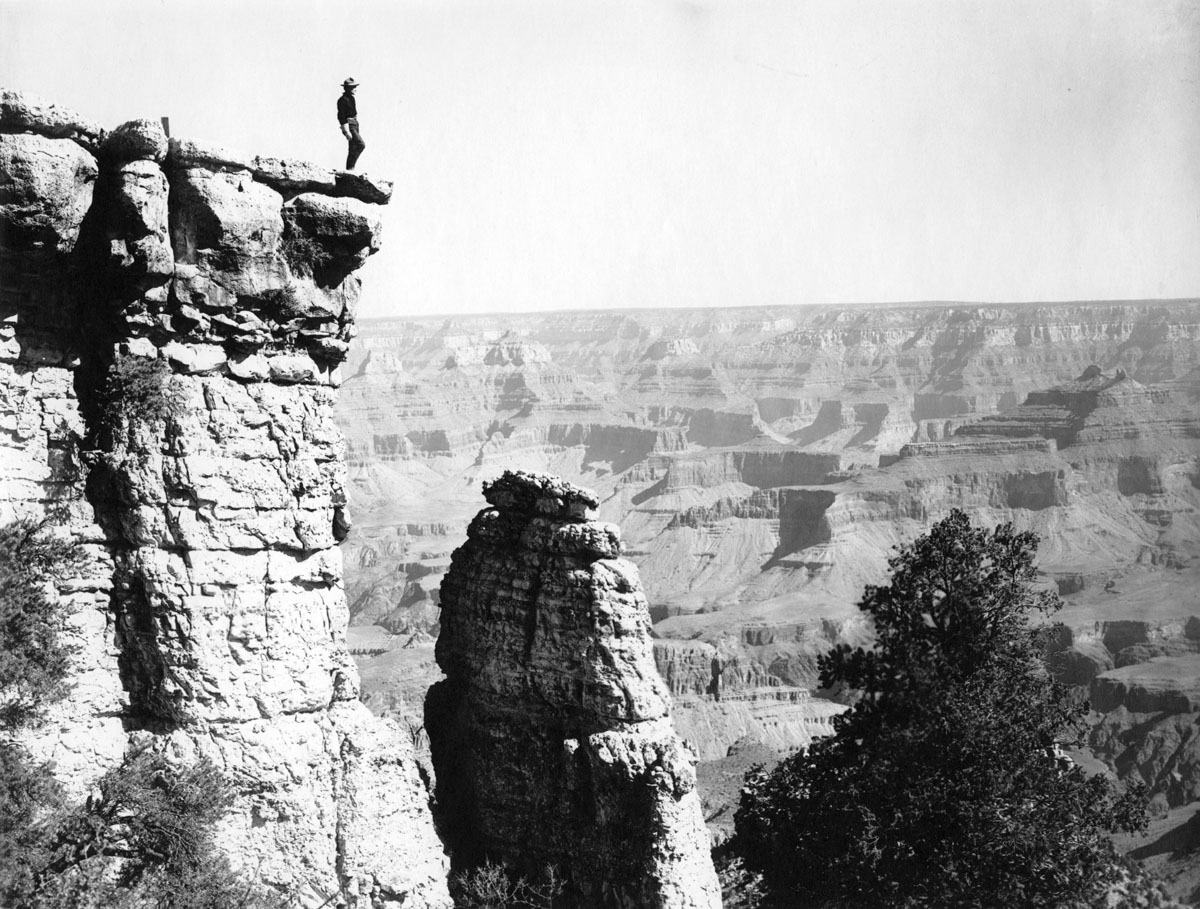
Perhaps no canyon mystery captivates quite like that of Glen and Bessie Hyde. The newlyweds set out from Green River, Utah, in the fall of 1928, hoping Bessie would become the first woman to run the length of the Colorado River through the canyon while setting a speed record along the way. They stopped at the South Rim in mid-November to resupply and visited photographer Emery Kolb’s studio, where Bessie is said to have remarked to Kolb’s young daughter that she wondered whether she would ever wear pretty shoes again. Days later, the Hydes vanished. Searchers found their scow drifting near river mile 237 in December, upright, fully packed and empty.
The mystery deepened nearly 50 years later. When Kolb died in 1976, his family cleared out his boathouse and found a human skeleton with a bullet wound to the skull, tucked away and forgotten. Speculation immediately ran toward Glen — and toward Kolb himself, who had once questioned the Hydes’ lack of life jackets and was now unable to answer for what he had been keeping. It wasn’t until 2008, when donated photographs linked the remains to an unrelated 1933 suicide near Shoshone Point that Kolb had once investigated as a coroner’s jury representative, that Glen’s name was finally cleared.
Glen and Bessie themselves were never found. More than one woman has claimed over the decades to be Bessie, grown old and living quietly under another name — none of the claims have held up, but each has kept the case in the news a little longer. Their disappearance has since inspired its own small library, from Brad Dimock’s Sunk Without a Sound to a novel and multiple documentary treatments, proof that some canyon mysteries are still being solved — or at least still being told.
By the time the last light drains from the canyon each evening, the ghost stories are usually just getting started. A marker that guards no grave. A burro who outlived the roof that once sheltered his statue, if only barely. Two honeymooners who never came home, and a boat that did. The Grand Canyon has spent more than a century being explained — geologically, historically, exhaustively — and it has spent every bit as long declining to explain itself completely.
Photography Courtesy of Grand Canyon National Park Service