

Canyon Mysteries
Where Legend Meets Stone
Writer Amanda Christmann // Photography Courtesy of Grand Canyon National Park Service
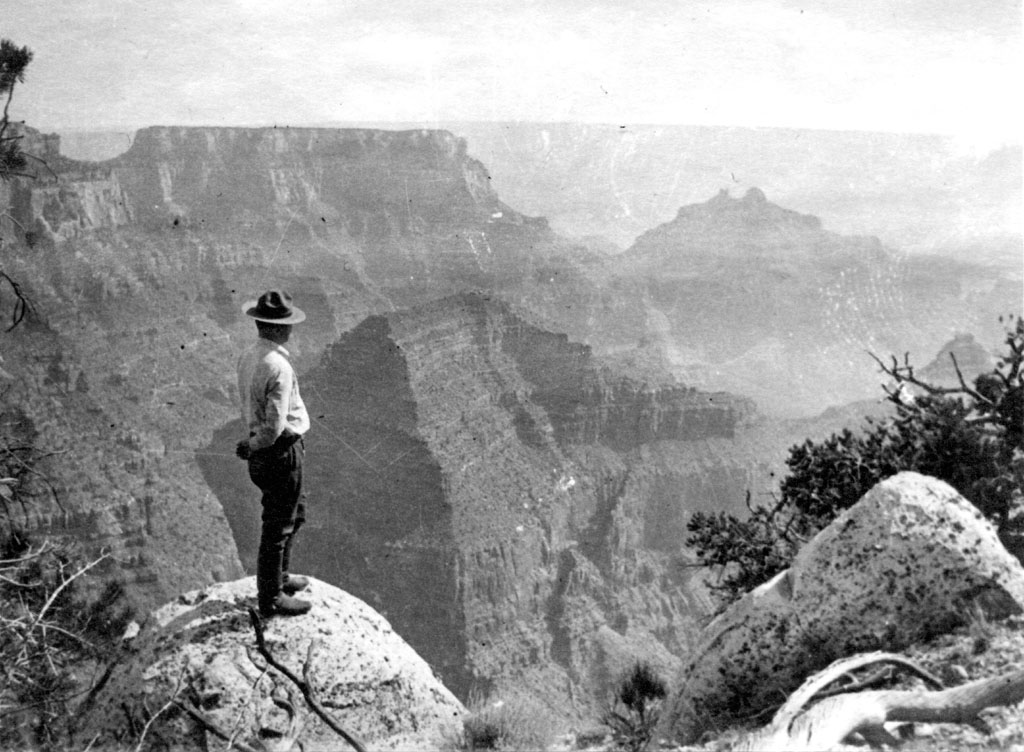
The Grand Canyon’s geological grandeur has always bred stories as layered as its ancient rock formations. Since its dedication as a national park in 1919, sublime beauty has inspired more than just awe from visitors — legends and lore, some holding threads of truth, have emanated from this rugged backdrop. While most travelers come for the vistas, those who linger often discover that Arizona’s crown jewel harbors mysteries that blur the line between documented history and enduring legend.
The Harvey Girl Who Never Was
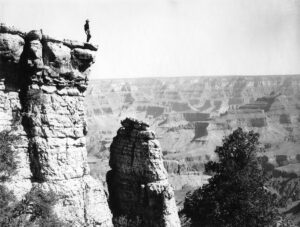
Walk past El Tovar Hotel’s parking area and you’ll encounter a weathered stone marker bearing “Pirl A. Ward, 1934” — a monument that has spawned one of the rim’s most persistent ghost stories. The tombstone-like block sits in a grove of trees, and local lore insists it marks the grave of a doomed Harvey Girl from the famous restaurant chain who met an untimely death. Witnesses claim to spot a black-shrouded figure near the stone on moonlit nights, perpetuating the romantic tragedy.
The truth proves more prosaic but equally touching: Pirl Ward was a man who reportedly worked at the hotel community, and the marker is a cenotaph — a monument where no body lies buried. He rests hundreds of miles away in Artesia, California. Yet the weathered stone continues drawing curious travelers, proving that sometimes legend serves a destination better than fact.
When Winter Claims Its Own
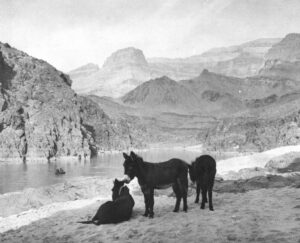
The canyon’s collection of stories reaches beyond human tragedy to encompass its beloved animal inhabitants. For three decades, from roughly 1892 to 1922, Brighty the burro wandered the canyon’s depths, named for Bright Angel Creek where he spent his summers on the North Rim. Children adored the gentle creature who would let them ride on his back, and he even met President Theodore Roosevelt during one memorable encounter. His story later inspired both a popular children’s book and Hollywood film.
According to local legend, Brighty’s light dimmed in the most terrible way during the brutal winter of 1922. A thief escaping into the canyon encountered the burro, and accustomed to human companionship — perhaps lonely in winter’s quiet — Brighty followed the criminal up the North Rim. When a merciless blizzard struck, both took refuge in a small cabin the thief broke into. Hours later, another traveler with severely frostbitten feet stumbled upon the same shelter. After a tense standoff — the thief brandishing an ax, the traveler wielding a bowie knife — they reluctantly agreed to share the space.
For three long months, snow continued falling while the unlikely companions faced off with their weapons, 12 feet of powder trapping them inside. By March, with food exhausted and desperation mounting, they looked at the skinny burro. Brighty surely looked back at them. The ax and knife found new purpose as survival trumped sentiment — whether for the greater good remains unclear.
The Honeymooners Who Vanished
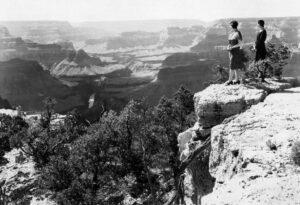
Perhaps no canyon mystery captivates like that of Glen and Bessie Hyde, newlyweds who launched their honeymoon adventure in 1928 with ambitious plans to break the Colorado River speed record. They launched their scow from Green River, Utah, navigating treacherous rapids with determination and love. They never finished the journey, vanishing into the canyon’s depths without a trace.
Nearly 50 years later, photographer Emery Kolb’s death in 1976 revealed a macabre discovery that reignited speculation about the missing couple. A skeleton bearing a gunshot wound to the head was found wrapped in canvas, hidden in a boat stored in Kolb’s garage rafters. Rumors immediately circulated that the remains belonged to Glen Hyde, finally solving the decades-old mystery.
Investigation suggested a more mundane explanation — Kolb had reportedly served on a coroner’s jury in the 1930s, and the skeleton likely came from a case near Yavapai Point. In 2008, donated photographs helped identify the bones as those of a suicide victim found by Kolb in 1933. Still, mystery buffs insist they belonged to the vanished honeymooner, preferring romantic tragedy to bureaucratic explanation.